The canvas
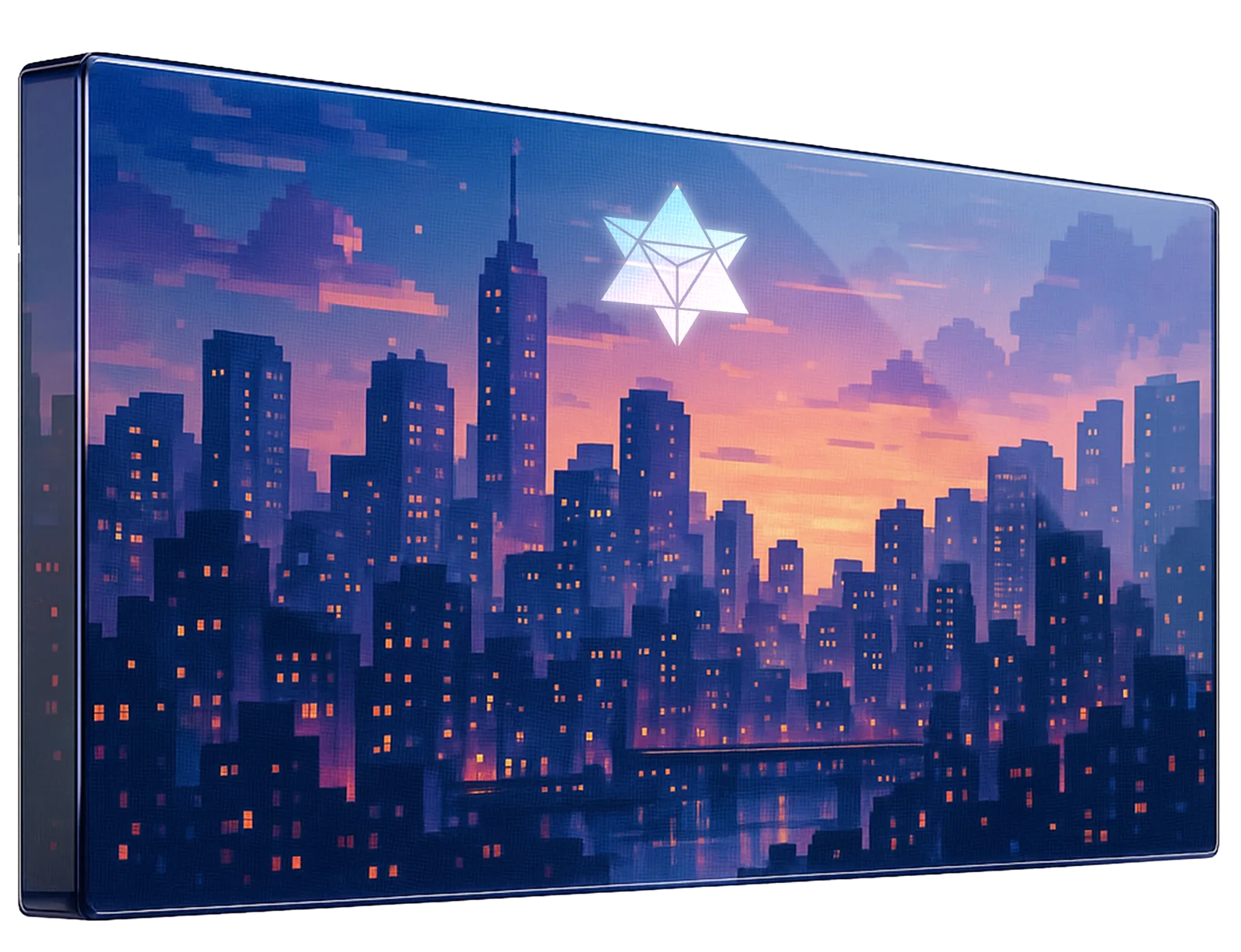
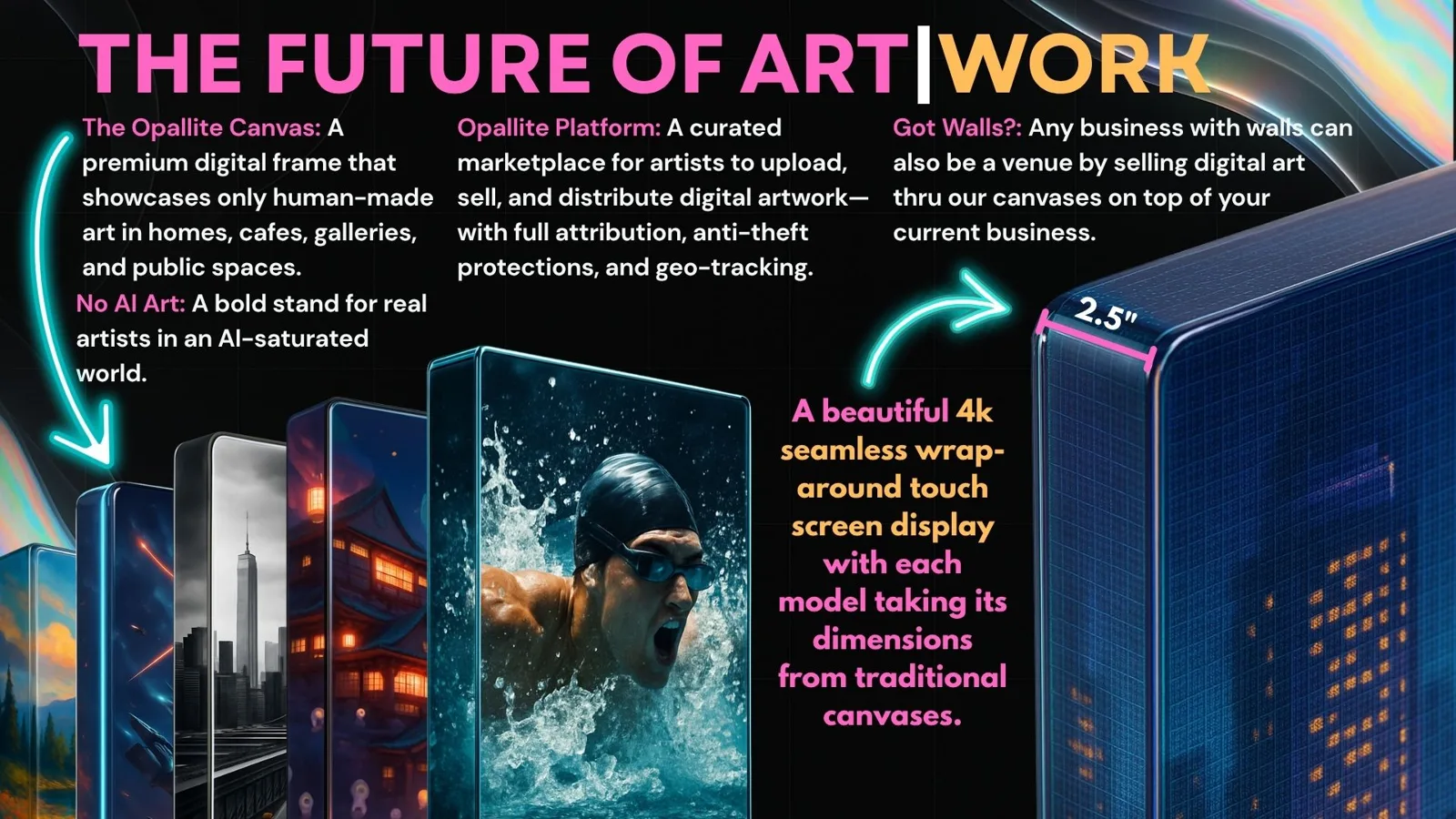
A 4K, seamless, wrap-around glass touch display, 2.5 inches deep, sized like a traditional canvas.
Opallite is a human-first digital art platform and a wrap-around glass canvas, built to give working digital artists income and a place in real rooms. I founded it, designed the product and the brand, and made the pitch deck and the research behind it, alone. It is at concept stage; this page shows the work and where it stands.
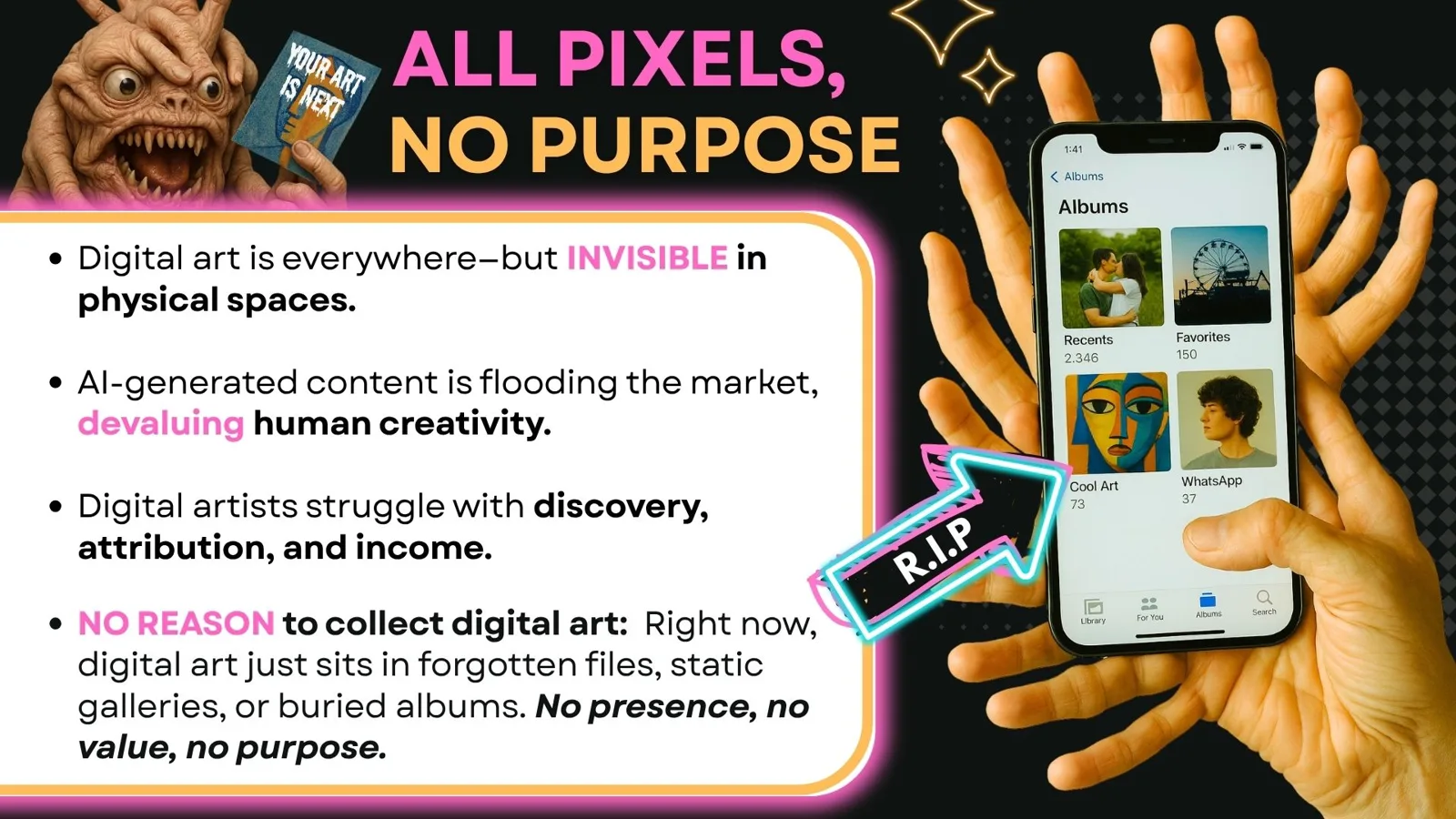
Digital art lives in camera rolls, folders and feeds. It has no presence in a room, nobody collects it the way they collect a print, and artists struggle with discovery, attribution and income.
Then AI-generated images flooded the same feeds, and the people who make digital art by hand were told their work was worth less. Opallite starts from a simple stand: a place that shows only human-made art, pays the people who made it, and puts it on a wall.
Giving Digital Art the Spotlight It Deserves — In the Real World.The tagline
A 4K, seamless, wrap-around glass touch display, 2.5 inches deep, sized like a traditional canvas.
A curated marketplace where artists upload, sell and distribute their work with full attribution and anti-theft protection.
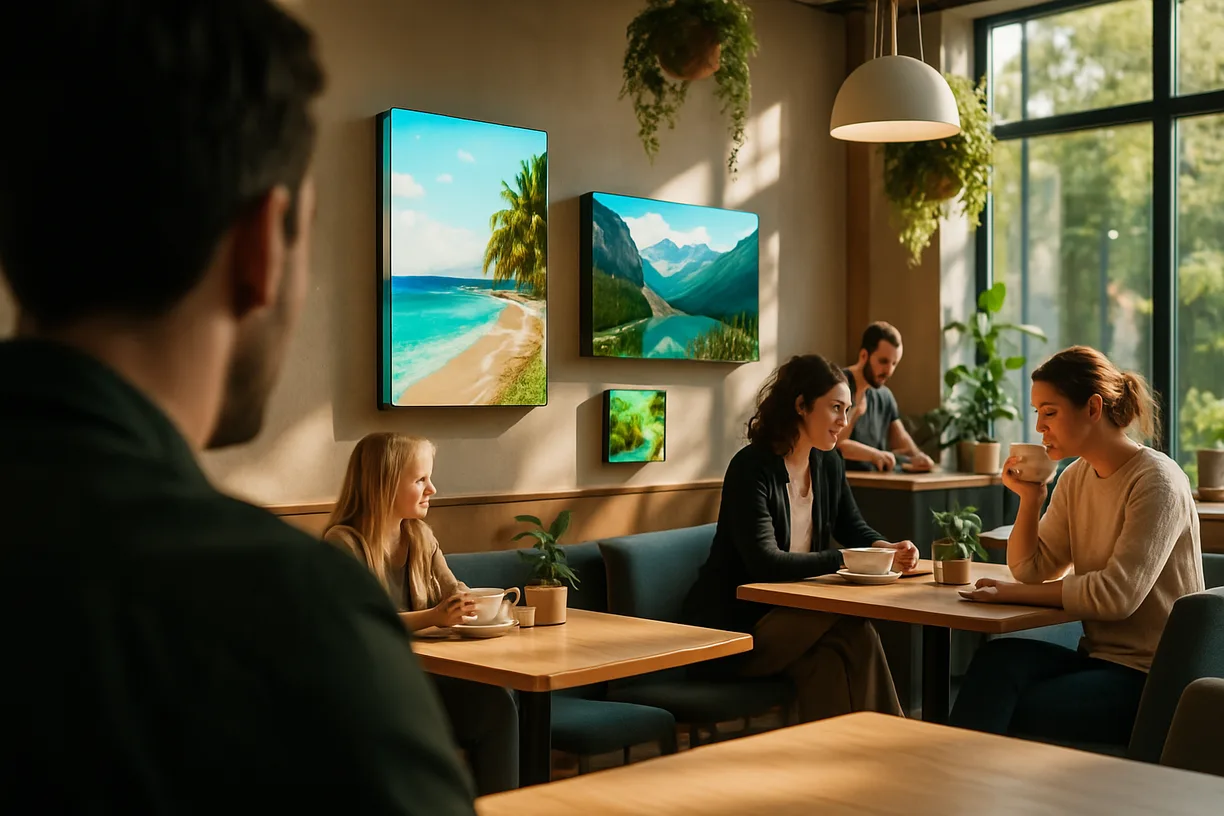
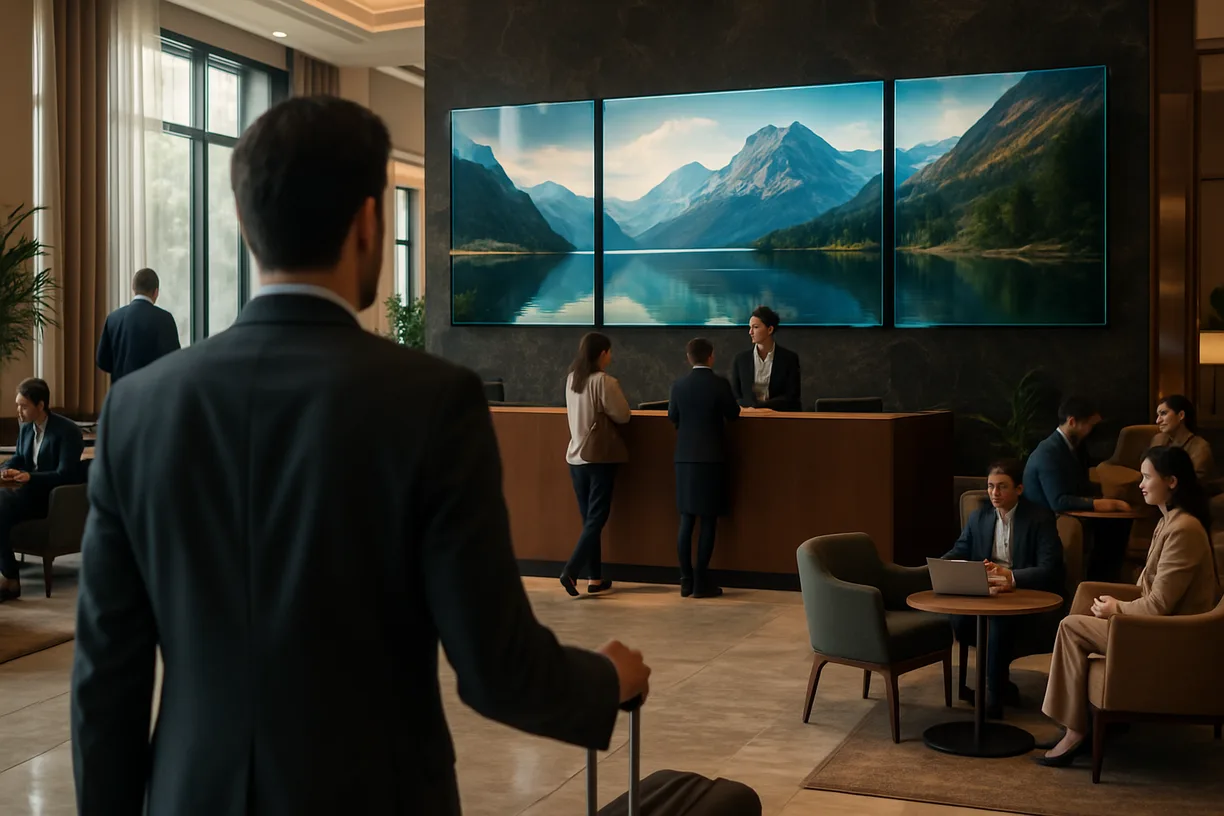
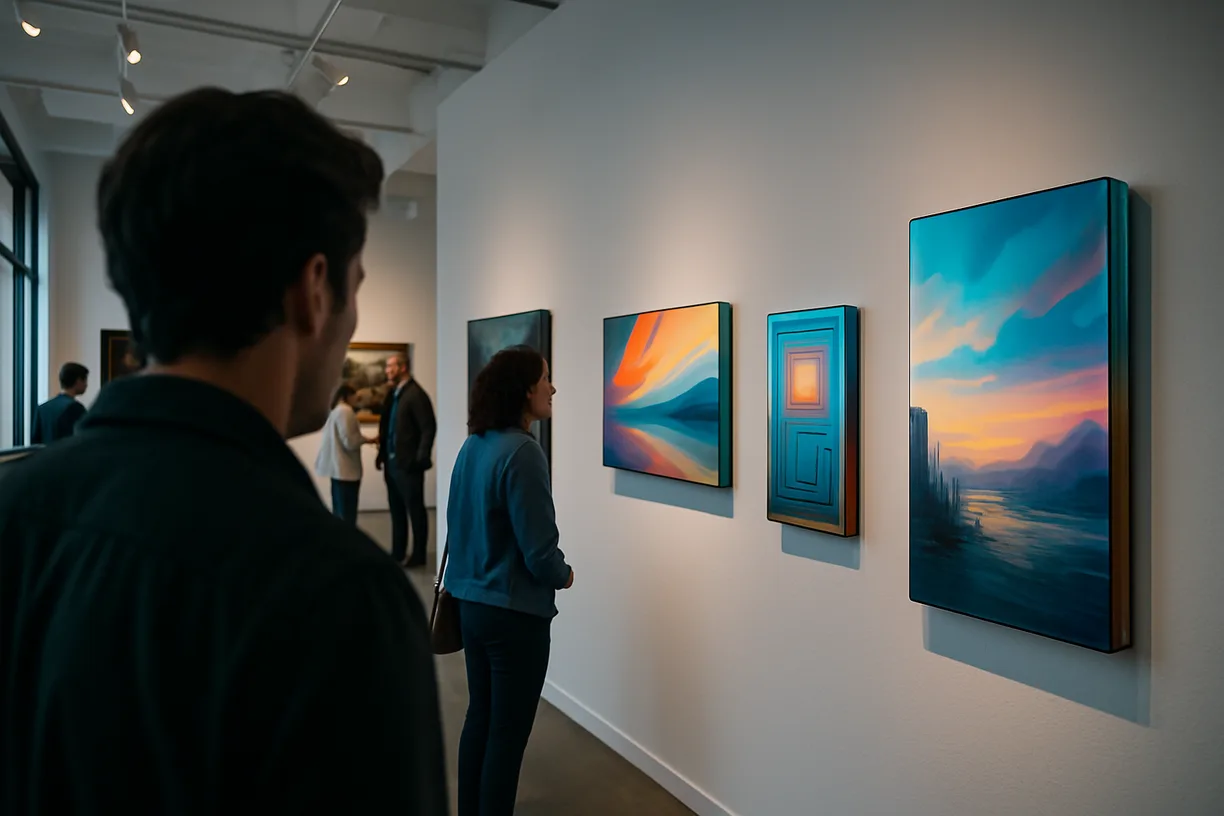
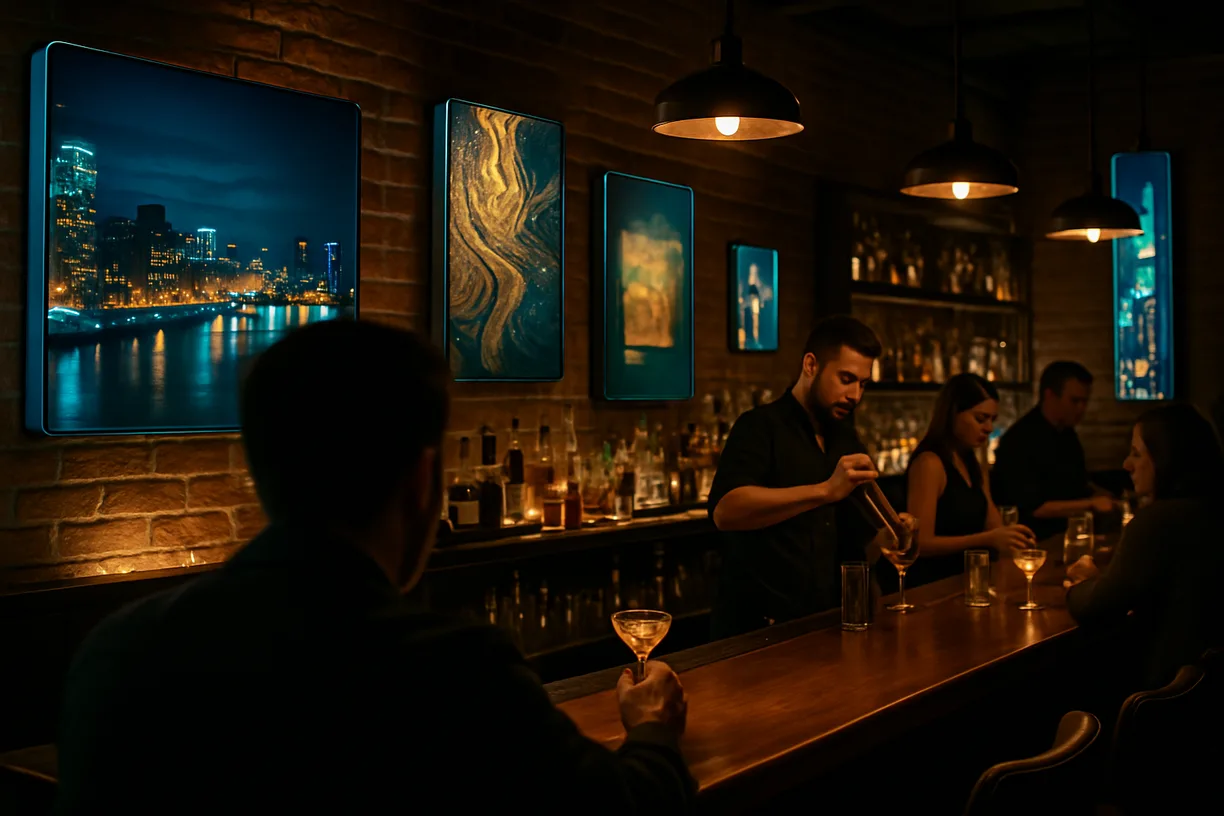
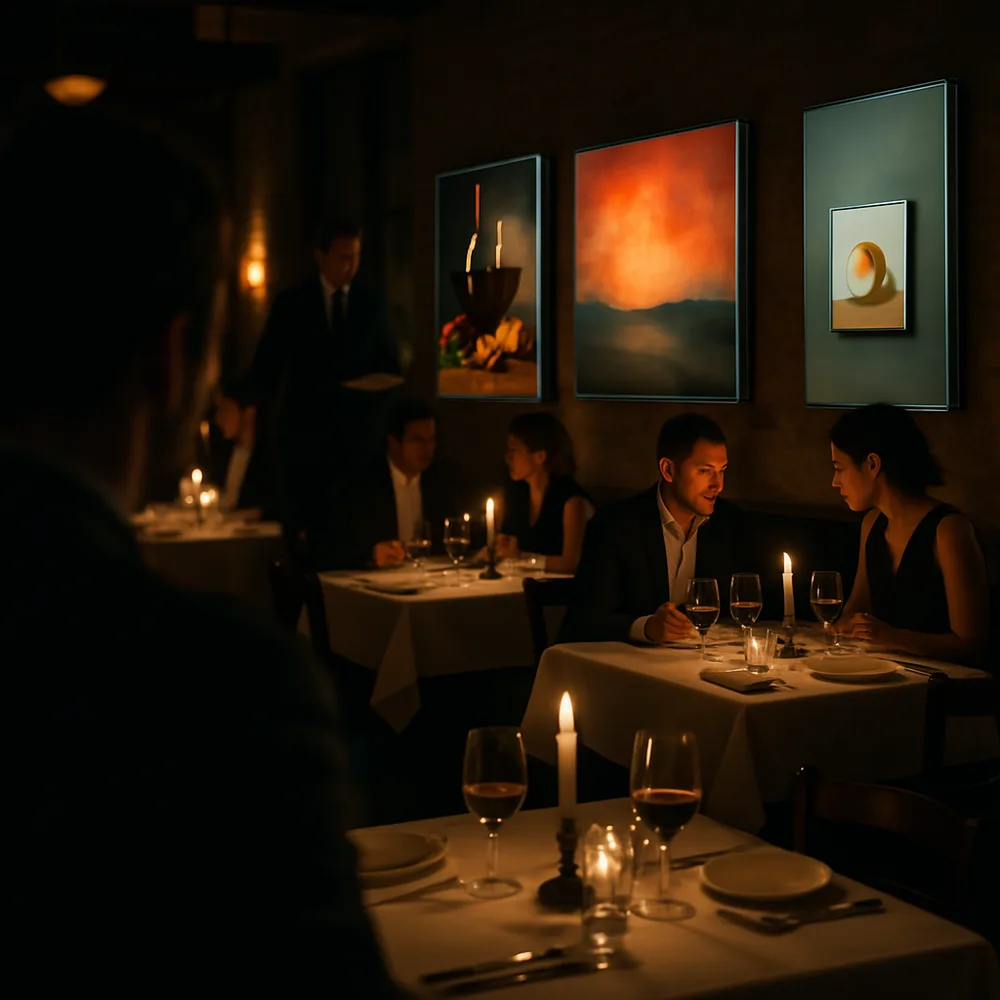
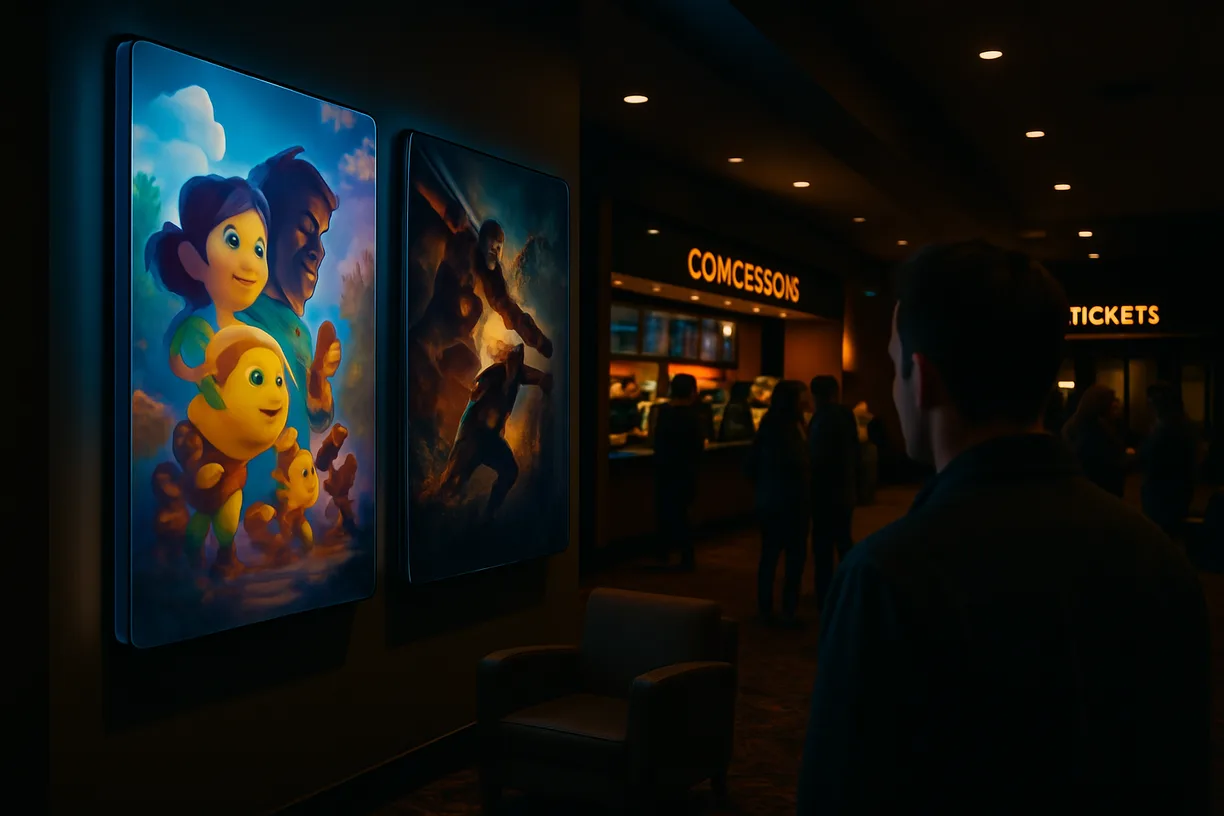
Two halves that depend on each other. Any business with walls can be a venue: a café, a hotel lobby, a gallery. The art on its wall is chosen from the marketplace and the artist is paid when it is shown or sold.
Nothing is built. The deck is explicit that the hardware is a concept, the platform's core features are defined and early mock-ups exist. The next step is working prototypes and pilot venues.
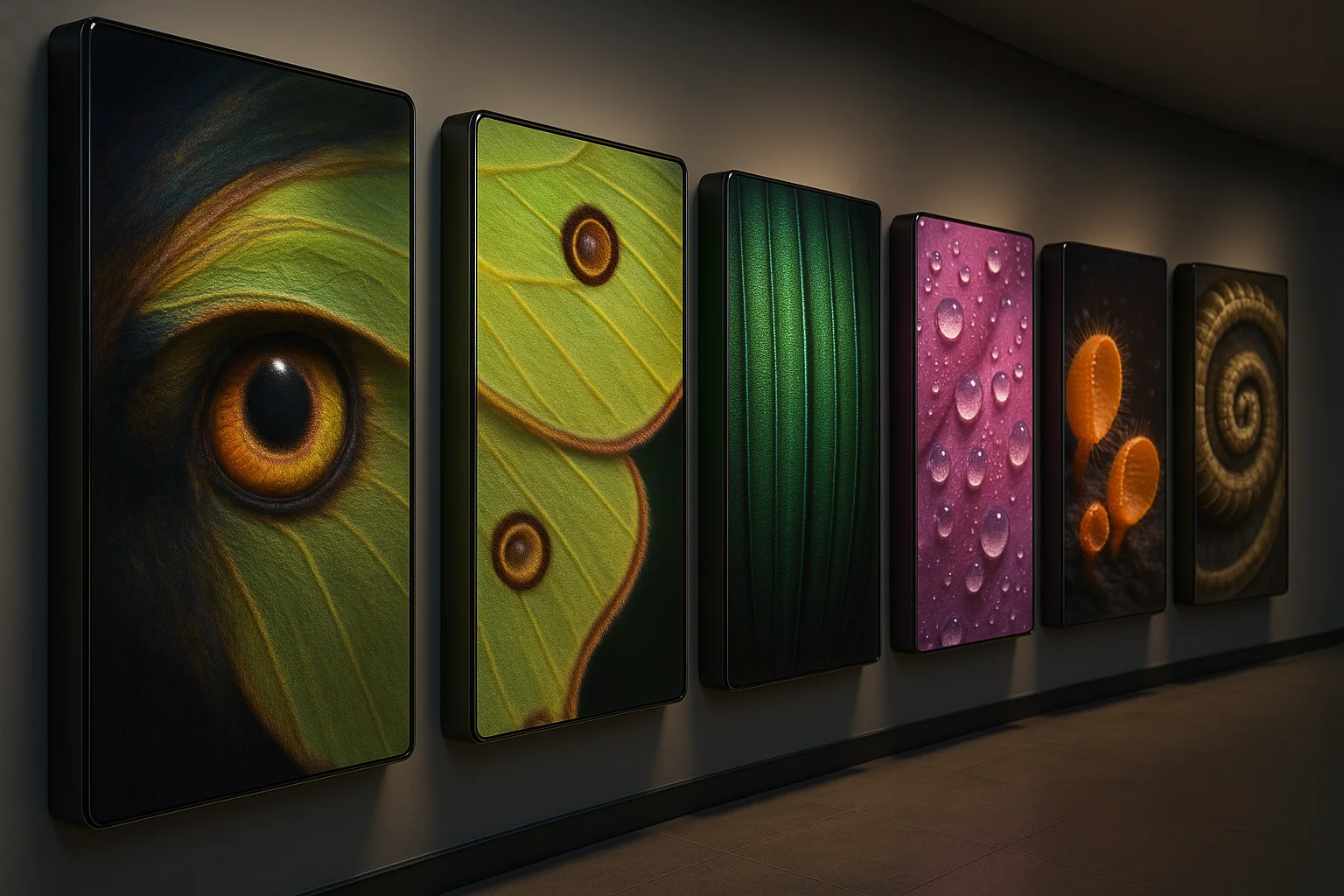
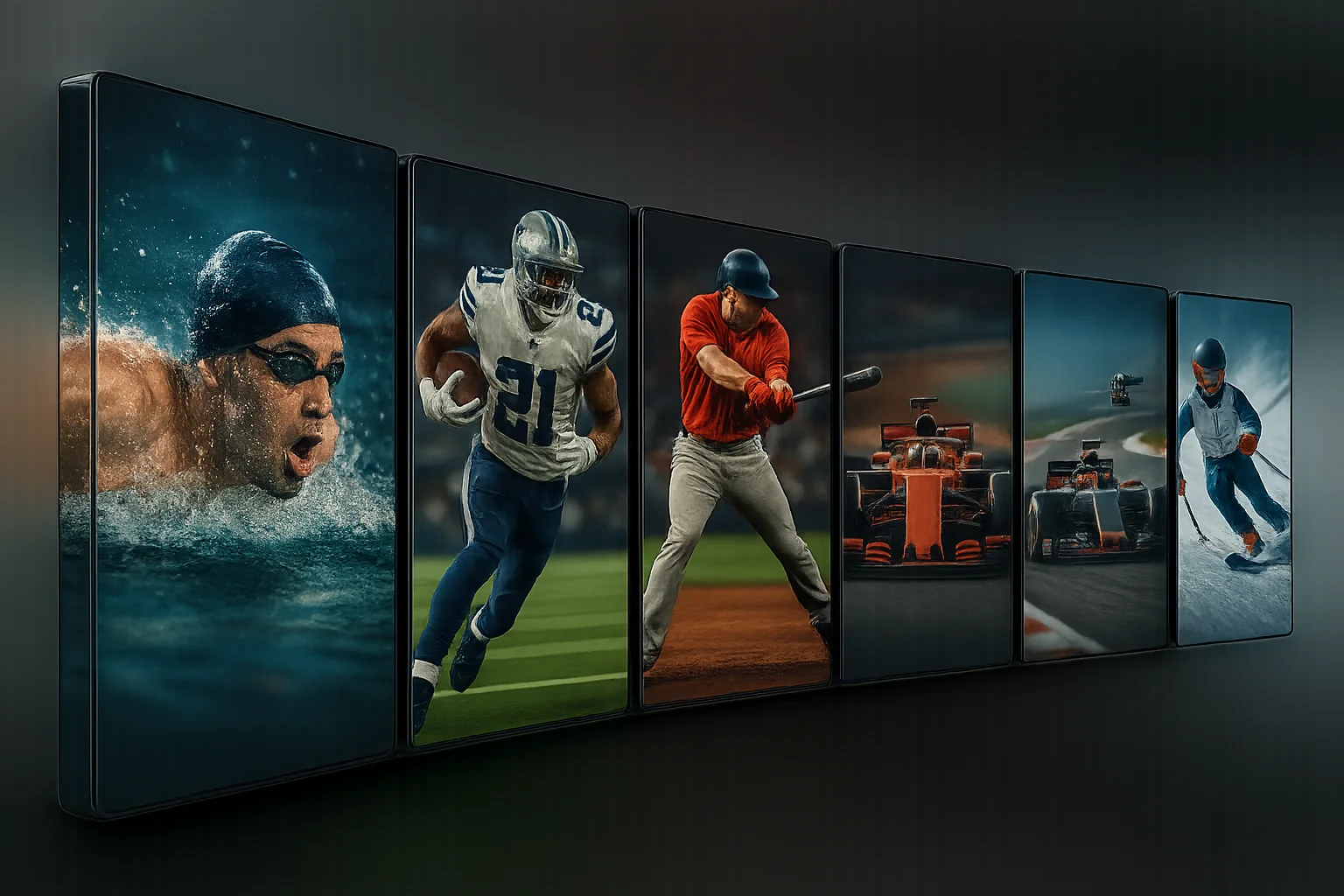
Before a single part was sourced, I needed people to see the canvas: the edge, the depth, how a wall of them would feel. Over a few nights at the end of May 2025 I generated dozens of product concepts and kept the ones that showed the idea best. They are AI-generated concept images, not photographs of hardware.
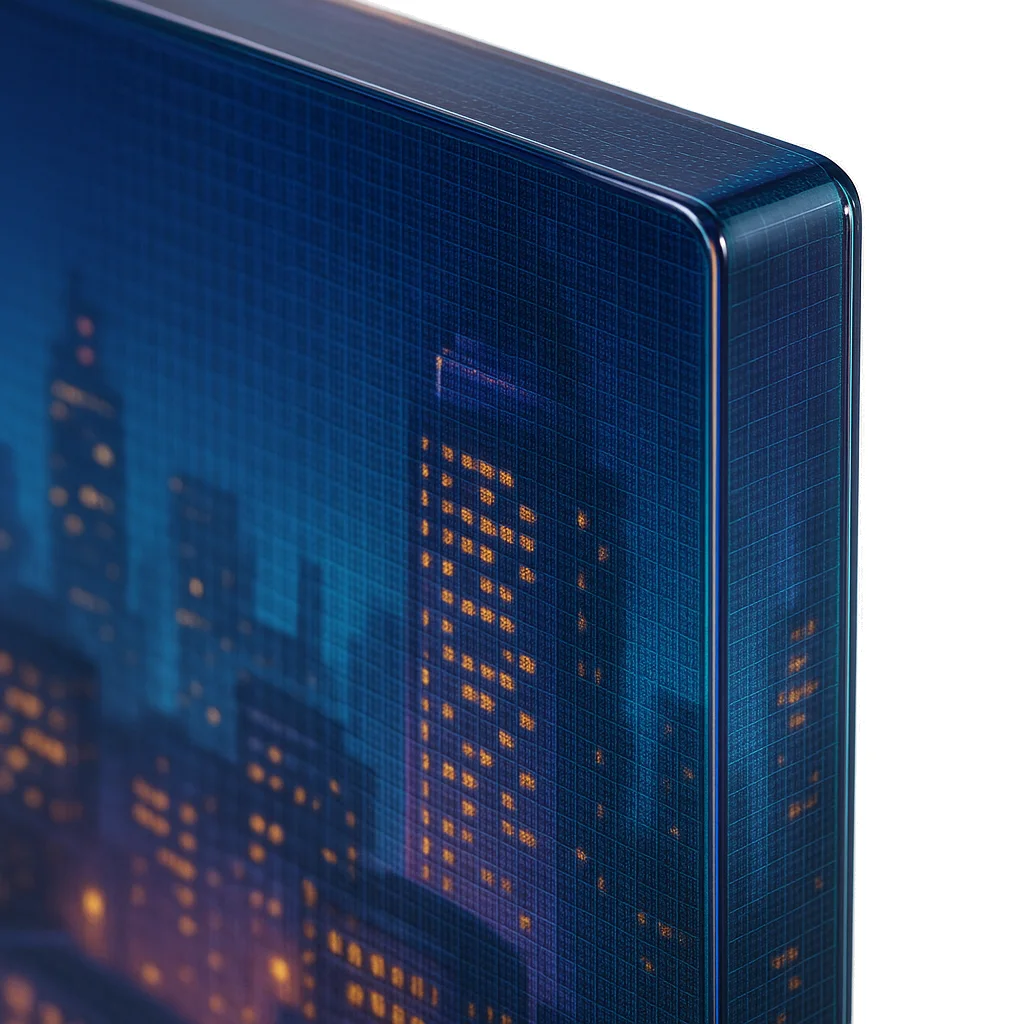
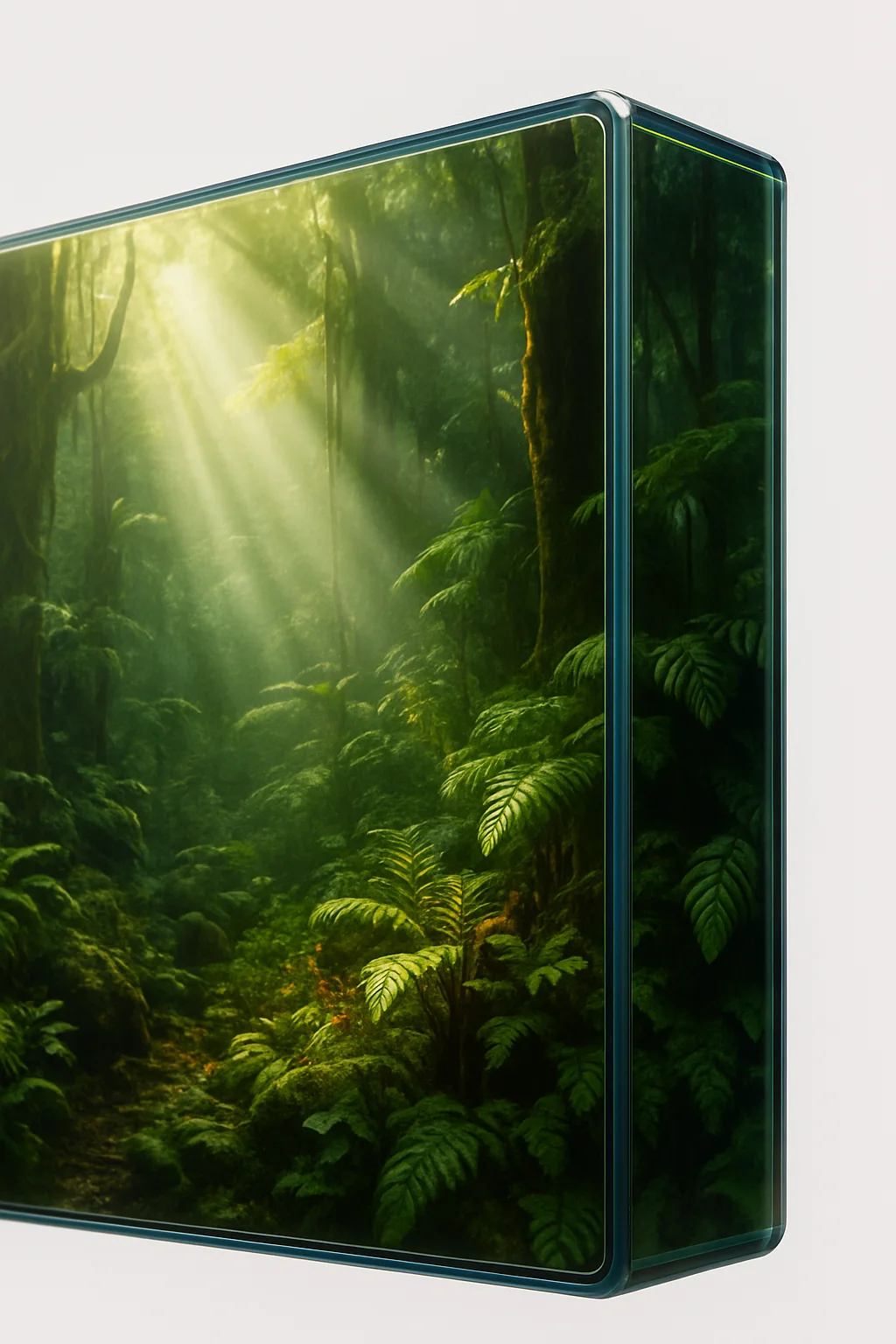
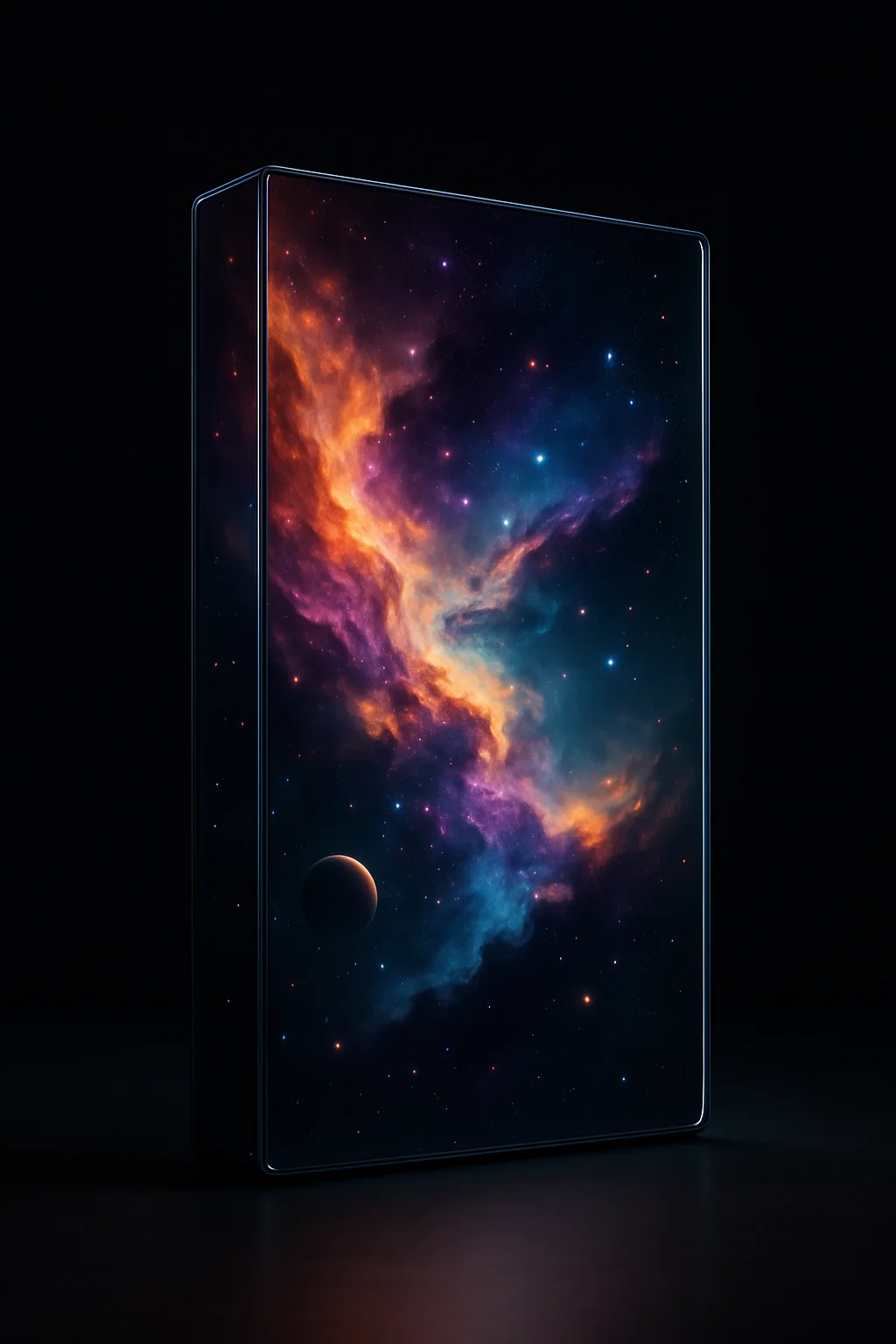
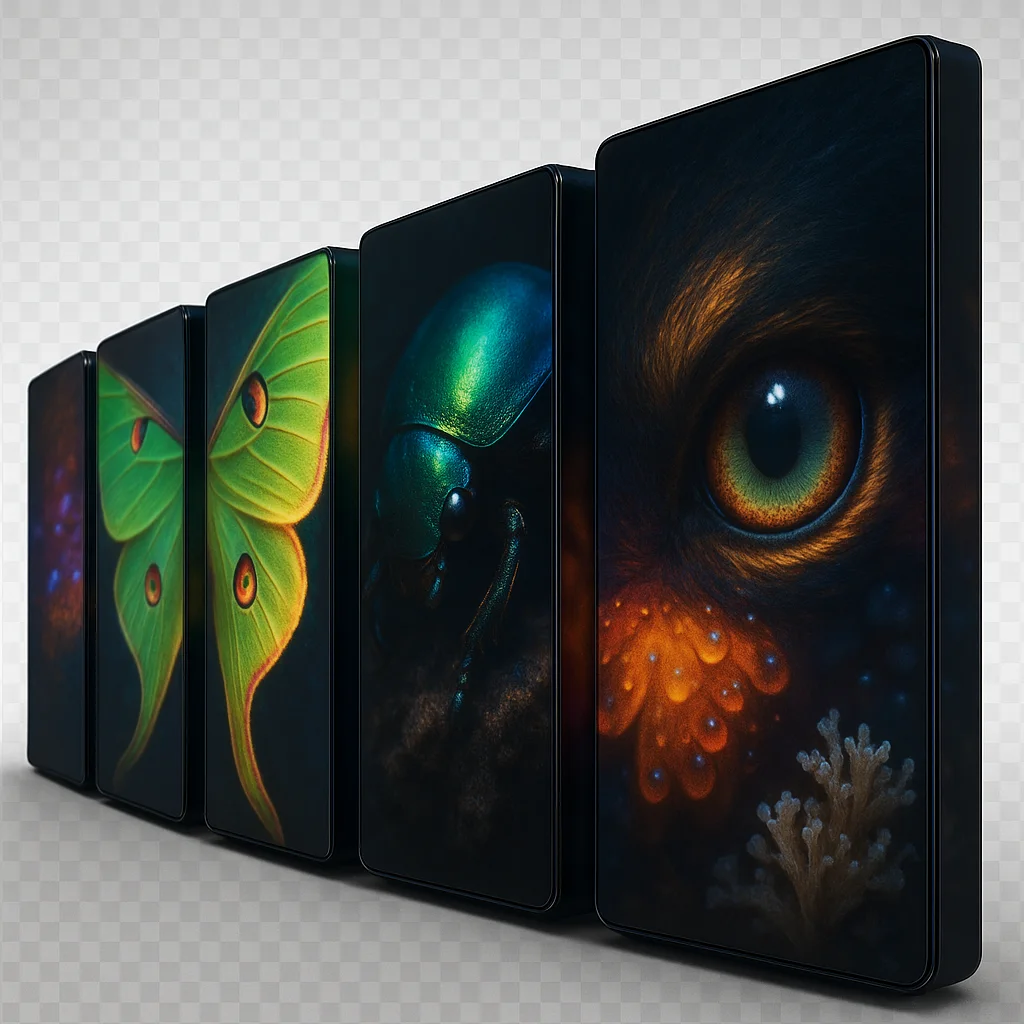
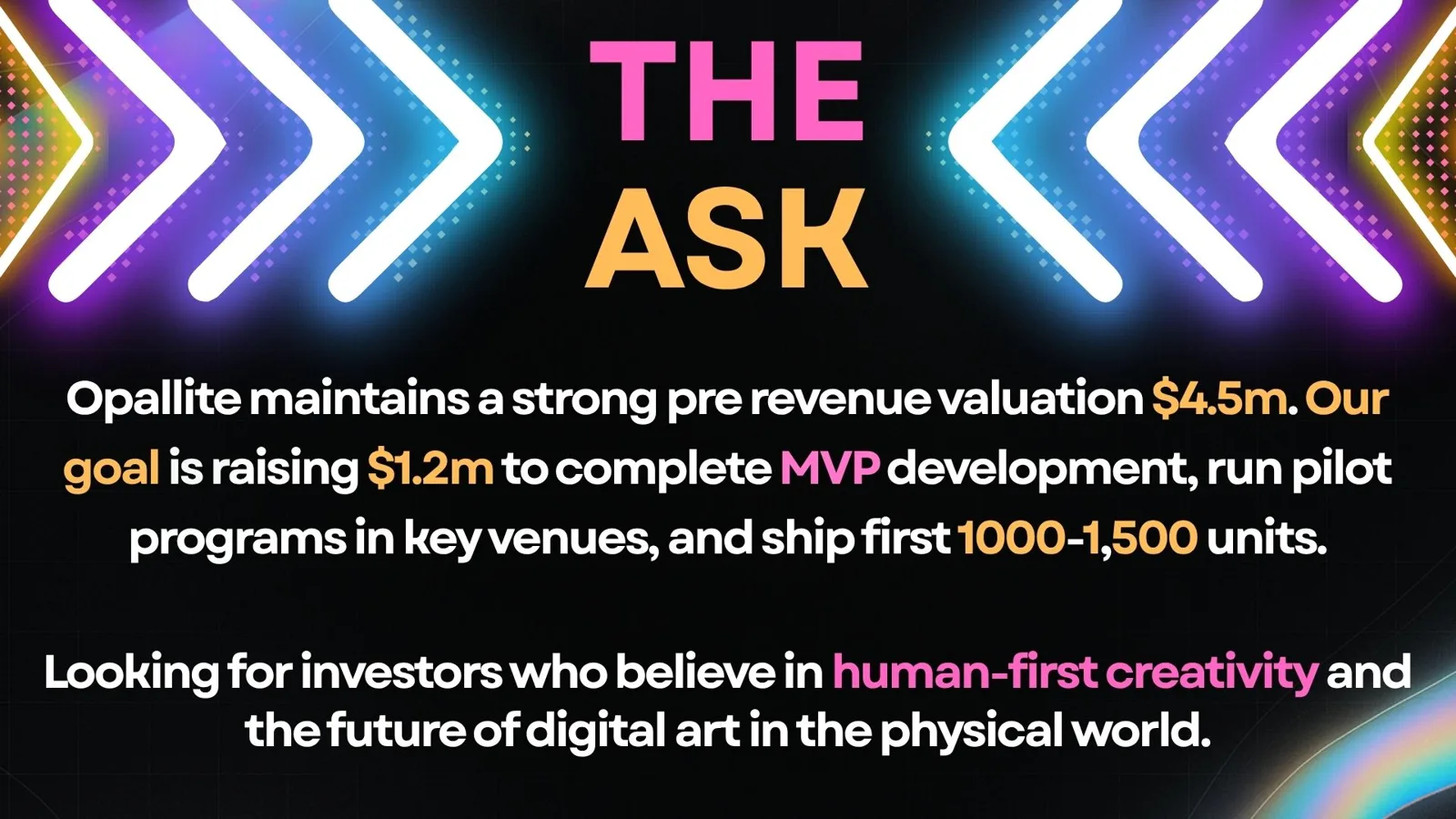
The pitch deck is the part of Opallite I am proudest of as a piece of work. I designed every slide in Canva and did the research behind the numbers, the graphs and the positioning, with no team and no template to lean on.
Its figures are my plan, not results, and the deck says so: it asks for a $1.2M pre-seed to take the project from concept to a working MVP.
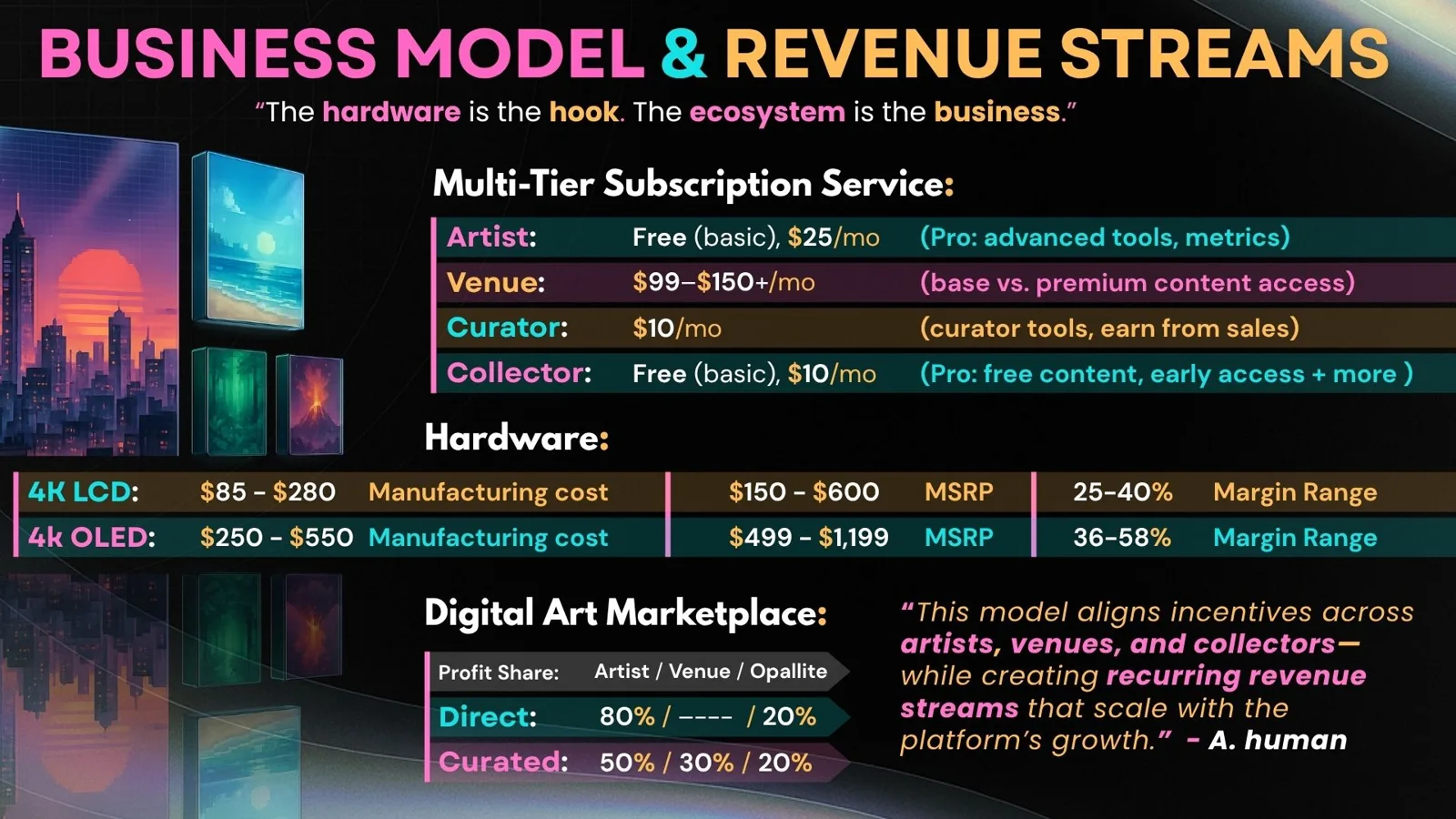
“The hardware is the hook. The ecosystem is the business.”Slide 6, the business modelSee all sixteen slides →
The first programme the company took part in.
Attended.
The ecosystem analysis, the business-plan chapters, the revenue models, concept renders of the canvas in venues, and the first logo files.
Four days. Pitched at the Indiana SBDC booth, answered finance questions on stage when Elizabeth Gore of Hello Alice invited me up, and met the founders and ecosystem builders who became friends.
Sixteen slides, designed and researched by me alone in Canva.
Selected for a five-minute pitch, matched with Moderne Ventures. The introductory call with Moderne followed on 15 July.
Incorporated in Delaware.
Indiana Technology & Innovation Association. Attended.
These are the things I can show evidence for: registrations, confirmations and the files themselves. Opallite has no customers, no revenue and no signed partners yet. On 5 August 2025 the gener8tor Great Lakes Innovation Accelerator wrote that Opallite was not selected for the final round of its first cohort: over 150 applications, five places.
Each piece of advice from these months came from someone who read the deck.
Five months, one no, one call, and a deck that needs to be rebuilt.
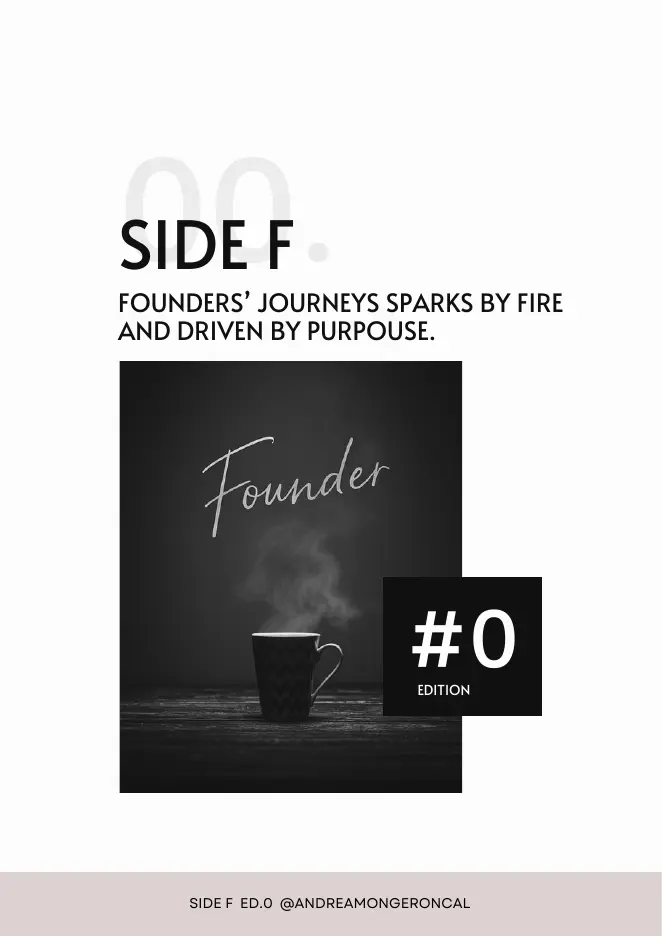
Featured in Side F, edition 0. A founders' ebook by Andrea Monge Roncal. Edition 0 includes my founder story from the Global Entrepreneurship Congress, and a look at the Opallite pitch deck. It is a founders' publication, not a news outlet.
Read my pages →March to August 2025 in order: an incubator, a summit, deck reviews, an investor-matching round, an introductory call and an accelerator letter that said no.
Why I Started OpalliteIt began with a crayon and the words "I wanna be an artist", and it built on a working life spent making digital art and the software that shows it.
Four Days at the Global Entrepreneurship CongressI got into GEC 2025 in Indianapolis on a promo code, talked Opallite through at a booth, took a few questions on stage and made friends on a dance floor.
The Hardware Is the HookOpallite's plan prices the canvas to bring artists and venues in, and treats the platform as the business. These are the plan's target numbers and the flywheel behind them.
Fan Art as a Legal Revenue LineStudios spend heavily policing fan art. My plan proposes a marketplace where fans sell it legally and the rights holder takes a share. A proposal with numbers attached, not a deal.
The Dead-Poster EconomyA movie poster is printed for one release, and my plan puts a cost on the cycle. The question behind slide 12's retail kiosk: could a wall that updates itself do the job?
Modelling a Startup With No HistoryWith no past to extrapolate, every Opallite number is a target. How the deck's market, plan and $1.2M ask fit together, and why my own revenue charts ran about thirteen times too big.
A Gallery, Not a Thrift StoreWhy Opallite's plan sets minimum prices for digital art, how the floors are structured, and why the revenue figures are projections resting on assumptions.
A Picture Frame With a USB PortChapter 11 of the Opallite plan treats the canvas as a platform: magnetic frames, expansion ports and a certification mark, modelled on accessory programs that already exist.
Fighting Fire With FireOpallite's pledge bans AI-made art, yet the plan's protection engine, FAIRE, is AI. Why I think that is consistent, and where it still makes me uneasy.
A Canvas That RepliesIn the Opallite plan a stranger can message an artist from the wall, and the artist answers on that same wall. A dual inbox, a world map of displays, and editions that make copies scarce.
All Pixels, No PurposeDigital art is everywhere and almost nowhere you can stand in front of it. That gap is the problem Opallite starts from, and AI makes it more urgent.
Art That Does Not Stop at the EdgeThe Opallite Canvas is designed as a wrap-around glass display, 2.5 inches deep, in the sizes of traditional canvases. Here is what it is meant to be.
I'm open to creative technical project management, founding teams, and agentic AI engineering and research. I read everything that comes in, and I answer.
onysnowstudios@gmail.comLinkedIn →
