Slide 6 of my pitch deck opens with a line I would put on the wall of the company: "The hardware is the hook. The ecosystem is the business." Every figure in this post is a target in a plan. Opallite has no revenue, no signed partners and no shipped hardware.
Why the screen cannot be the business
A digital canvas is a hard thing to sell on its own. It is a screen, and screens compete with every TV and photo frame on price. If the object had to earn the whole business, Opallite would be another display company and the artists would be an afterthought.
So the plan lets the canvas do one job, which is to get art on walls and people through the door. The platform carries the business.
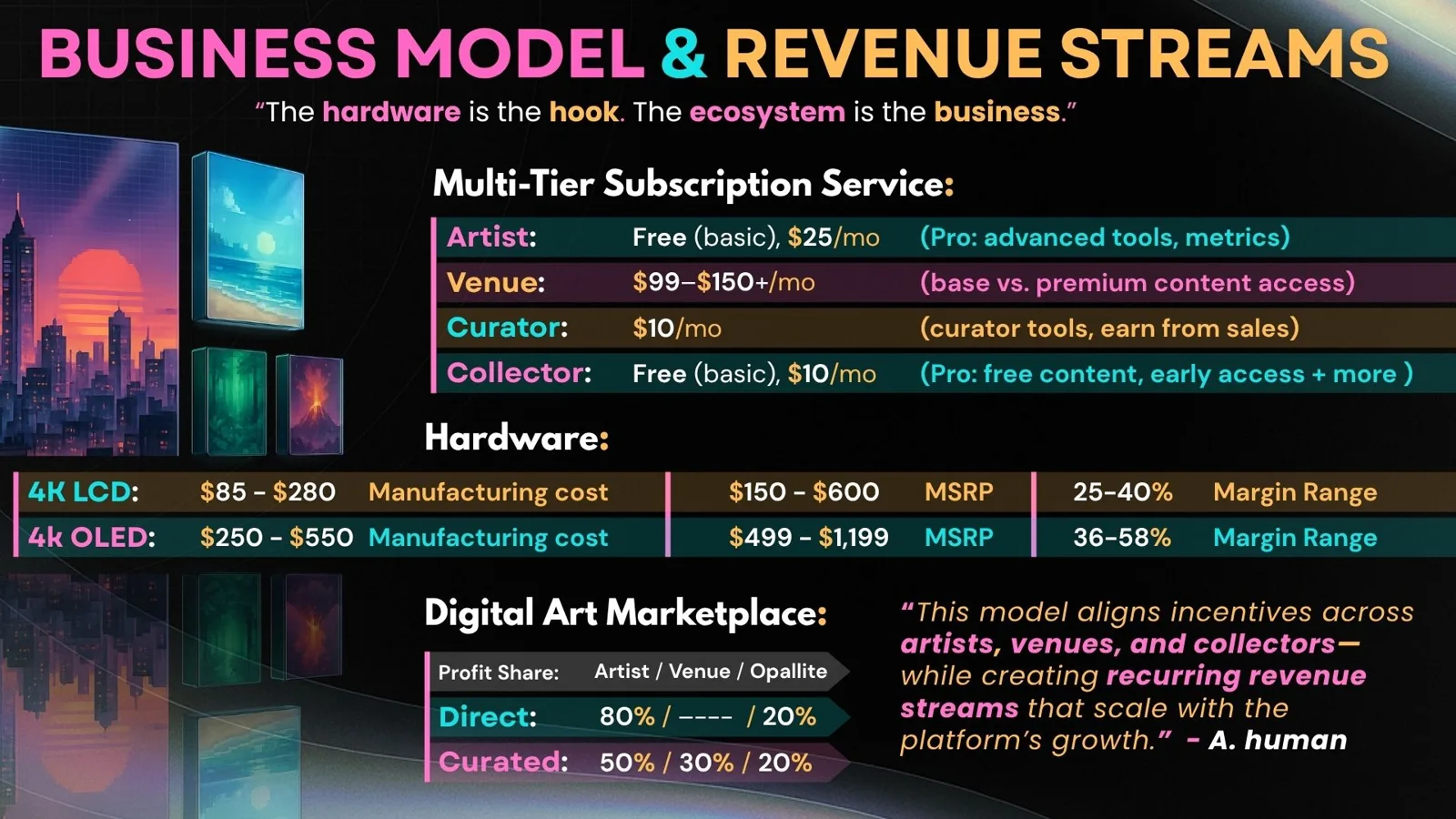
The hardware, as the deck has it
Two screen options, each with a manufacturing cost range, an MSRP range and a margin range:
| Manufacturing cost | MSRP | Margin range | |
|---|---|---|---|
| 4K LCD | $85 to $280 | $150 to $600 | 25 to 40% |
| 4K OLED | $250 to $550 | $499 to $1,199 | 36 to 58% |
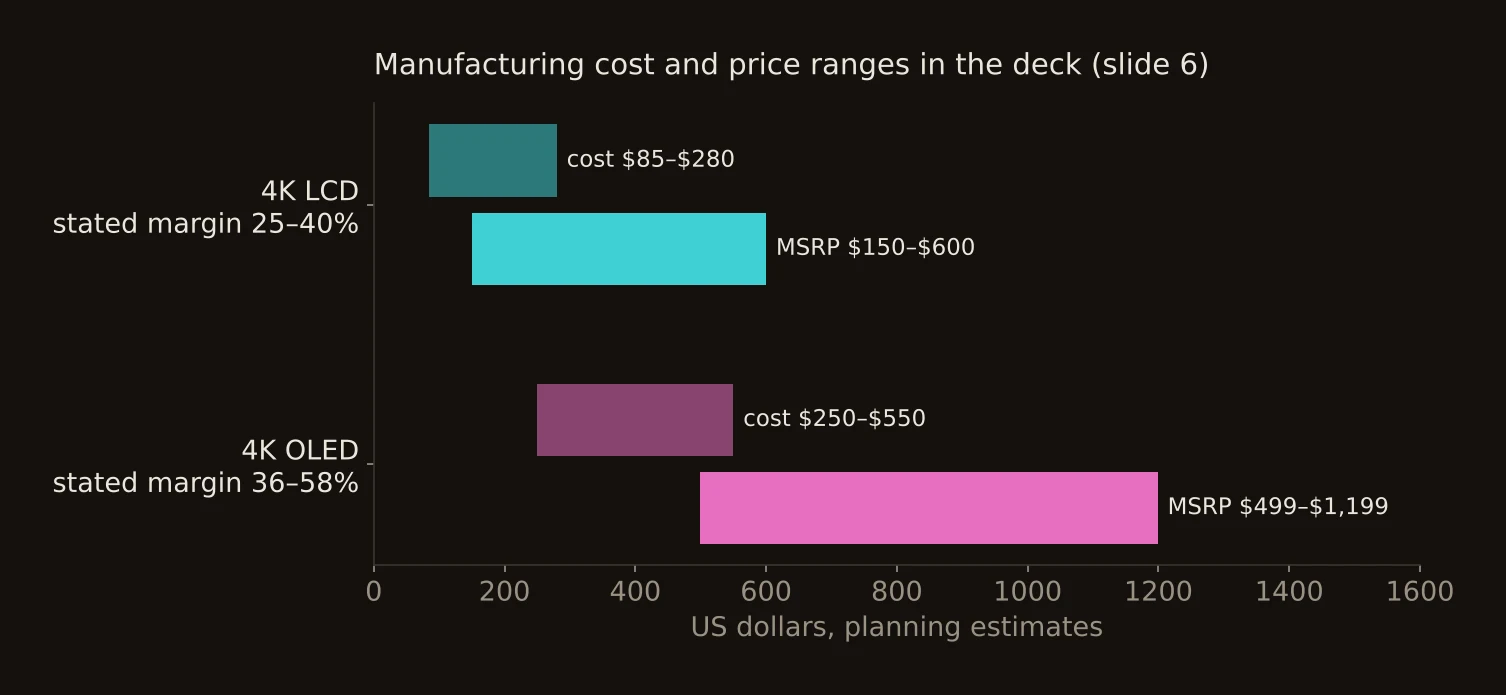
These are planning estimates, and no canvas has been built or tested. The plan's stated aim is an affordable entry point: a base unit with the premium display, expanded later through modules.
Where the plan puts the money
Slide 6 lists the subscription tiers I am aiming for:
- Artist: free basic tier, $25 a month for Pro (advanced tools and metrics)
- Venue: $99 to $150 or more a month (base versus premium content access)
- Curator: $10 a month (curator tools, earning from sales)
- Collector: free basic tier, $10 a month for Pro (free content, early access and more)
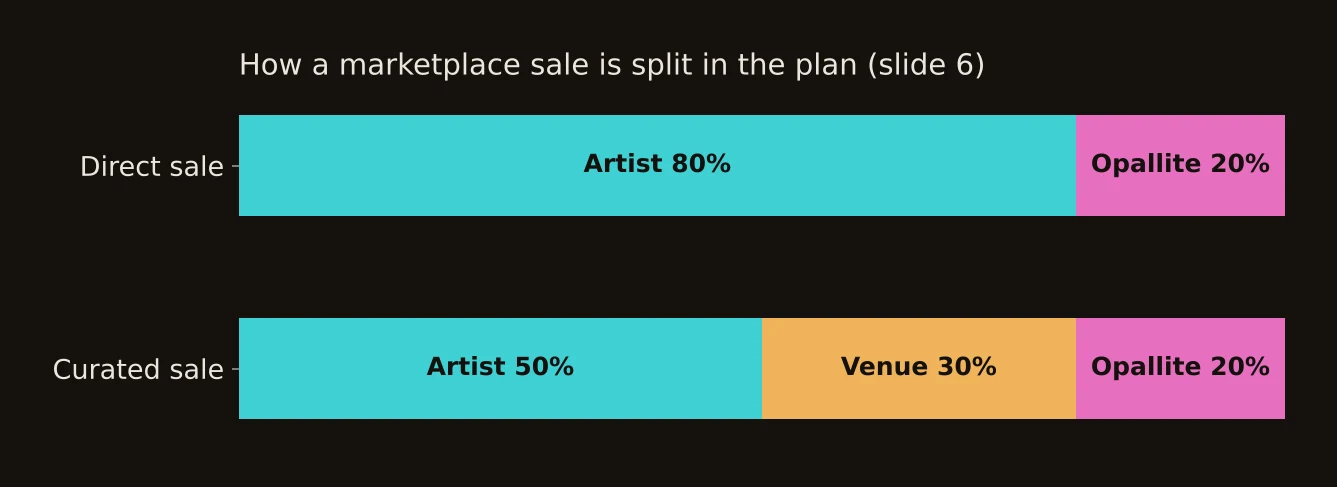
On art sold through the marketplace, the slide splits each sale between artist, venue and Opallite:
- Direct sales: 80% artist, 20% Opallite
- Curated sales: 50% artist, 30% venue, 20% Opallite
Each group gets something from the others being there. Artists get a wall and an audience, venues get content that changes, collectors get a reason to own digital art. The deck's words: "This model aligns incentives across artists, venues, and collectors, while creating recurring revenue streams that scale with the platform's growth."
The flywheel
Slide 7 is titled "Flywheel You Fools!" with the subtitle "(The real revenue engine)." An advisor who reviewed the deck wrote back that the "Flywheel you fools" reference "made me smile."
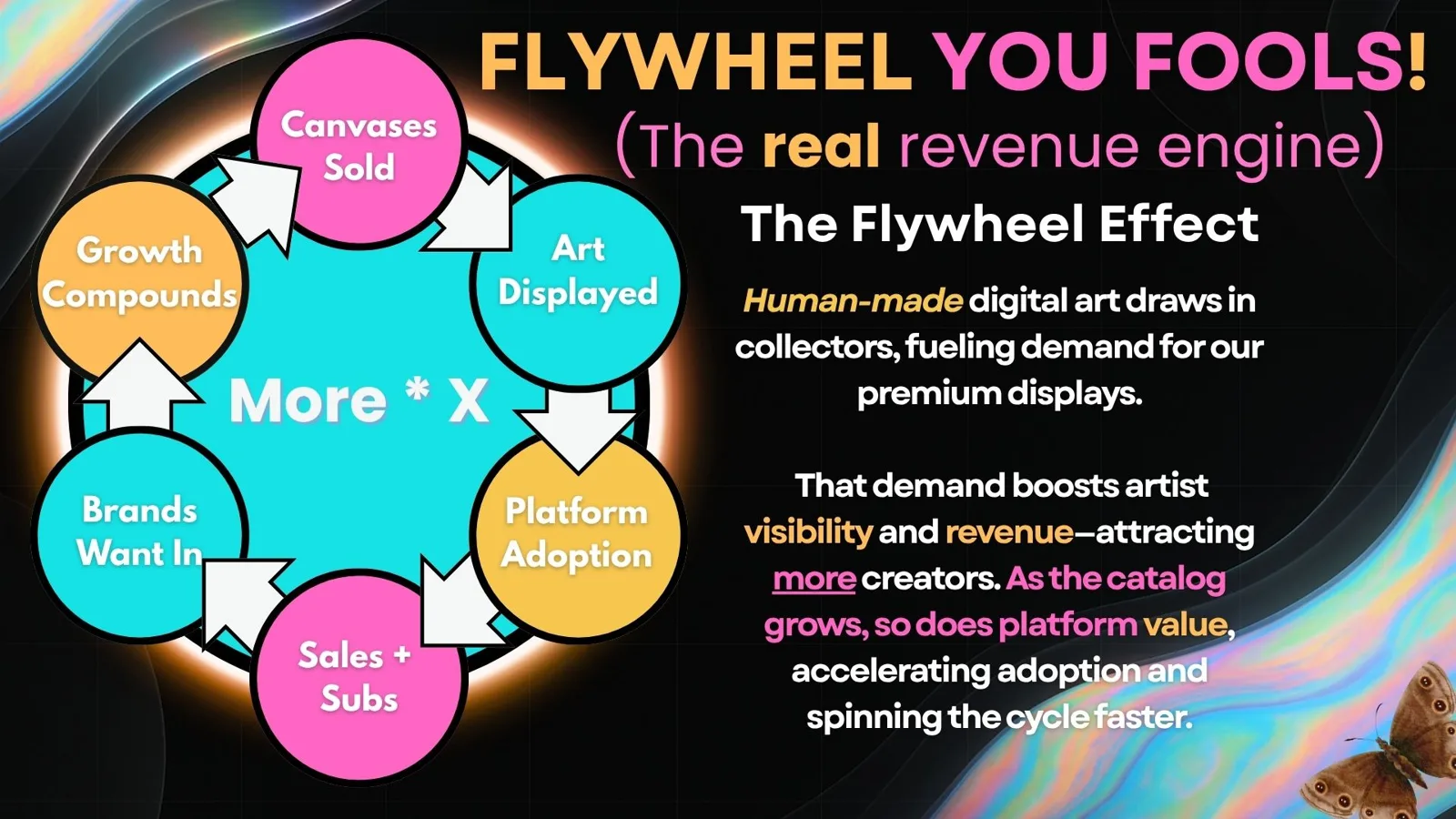
The loop has six steps: canvases sold, art displayed, platform adoption, sales and subscriptions, brands want in, growth compounds. Human-made art draws in collectors, that demand lifts artist visibility and revenue, and that brings in more creators. "As the catalog grows, so does platform value, accelerating adoption and spinning the cycle faster." At the centre of the wheel the slide writes "More * X." That is the honest label: each turn is meant to make the next easier, and the size of the multiple is unknown.
What would have to be true
A flywheel is a hypothesis. This one needs four things:
- Artists want their work on a wall. That is the bet of the first post.
- Venues see enough value in changing art to pay a monthly fee.
- Collectors buy. The splits only matter if there are sales to split.
- The canvas gets built, at roughly the cost in the table.
The shape, not the size
I am confident in the shape: a canvas that brings people in, and a platform that earns from the long relationship. The numbers are my own estimates from research I did alone, not results from customers. Next they have to meet real people and real quotes.
