Journal.
Research, notes, and what's behind the work.
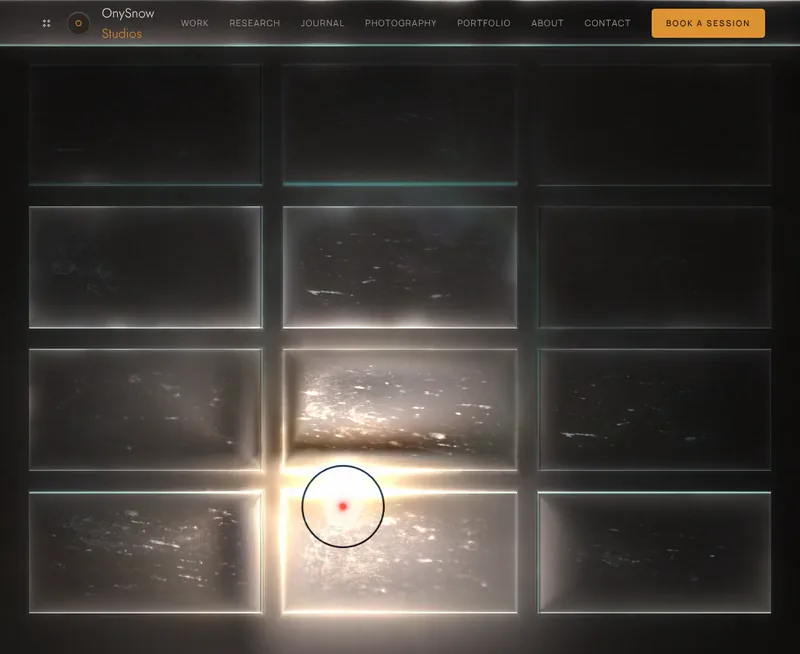
A test room of twelve glass panesA development page holds twelve panes, four rows of three, on a dark backdrop with no photograph. Each pane is built differently, so an effect can be judged on the glass alone and matched to a setting.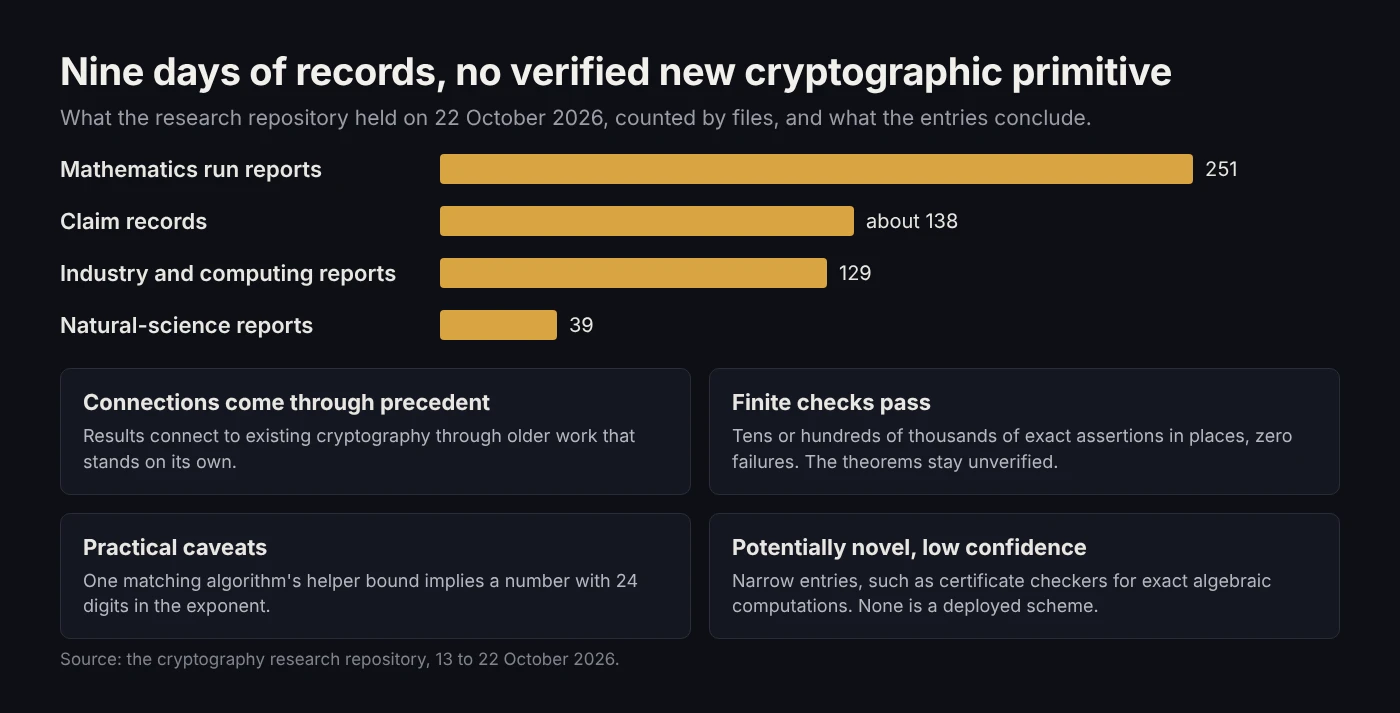 What nine days of cryptography research records showAfter nine days, most entries in the research repository end the same way: related precedent, finite checks passed, theorem unverified, and no verified new cryptographic primitive.
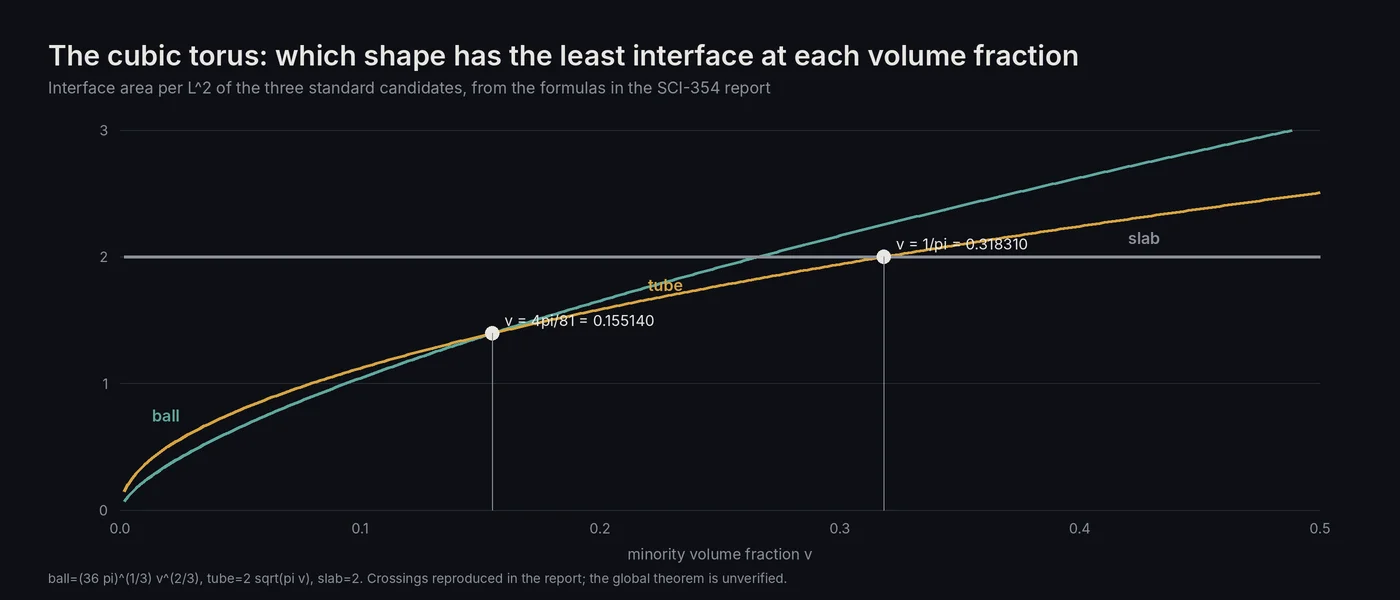 What two maths manuscripts predict about measurable physicsTwo reports from 22 October read manuscripts on fracture and on interfaces in a cubic torus for physical consequences, and mostly found limits. A wrong fracture model can fit well and be about 27% low, and the torus effect vanishes as the cell grows.
What nine days of cryptography research records showAfter nine days, most entries in the research repository end the same way: related precedent, finite checks passed, theorem unverified, and no verified new cryptographic primitive.What two maths manuscripts predict about measurable physicsTwo reports from 22 October read manuscripts on fracture and on interfaces in a cubic torus for physical consequences, and mostly found limits. A wrong fracture model can fit well and be about 27% low, and the torus effect vanishes as the cell grows.Every piece.
October 202656 pieces
22Thu
- What nine days of cryptography research records showAfter nine days, most entries in the research repository end the same way: related precedent, finite checks passed, theorem unverified, and no verified new cryptographic primitive.
- What two maths manuscripts predict about measurable physicsTwo reports from 22 October read manuscripts on fracture and on interfaces in a cubic torus for physical consequences, and mostly found limits. A wrong fracture model can fit well and be about 27% low, and the torus effect vanishes as the cell grows.
19Mon
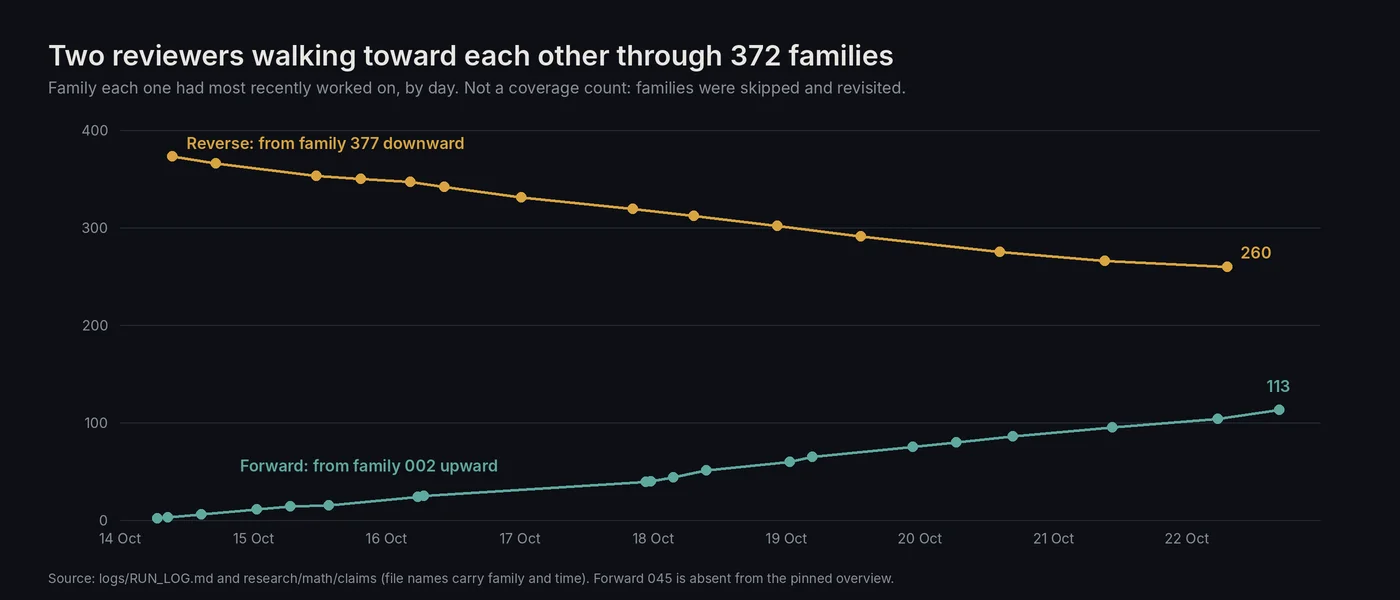
- How the manuscript audits are run and trackedTwo reviewers work through the manuscripts from opposite ends, each source pinned to an exact version. An audit of the project's own records on 19 October found the coverage ledger was a narrative rather than a census, and the exact completion percentage unknown.
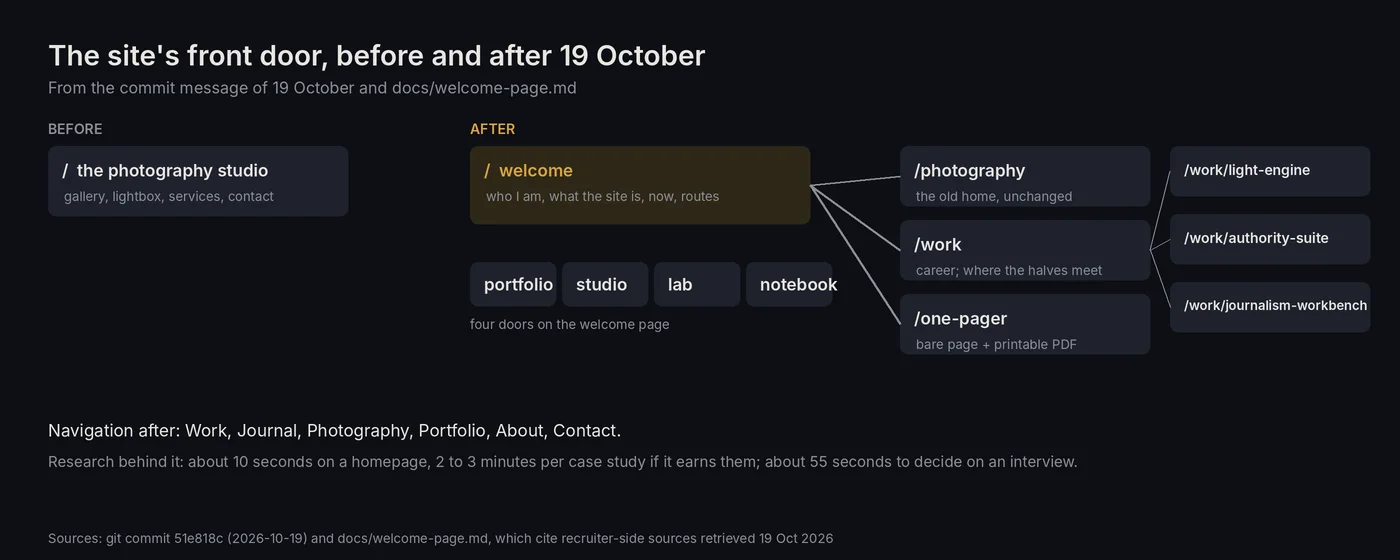
- Replacing the photography home page with a welcome pageOn 19 October the site's first page became a welcome page that routes to photography, three case studies and a one-page summary. It follows research into how portfolios are read, which found a recruiter spends about 10 seconds on a homepage.
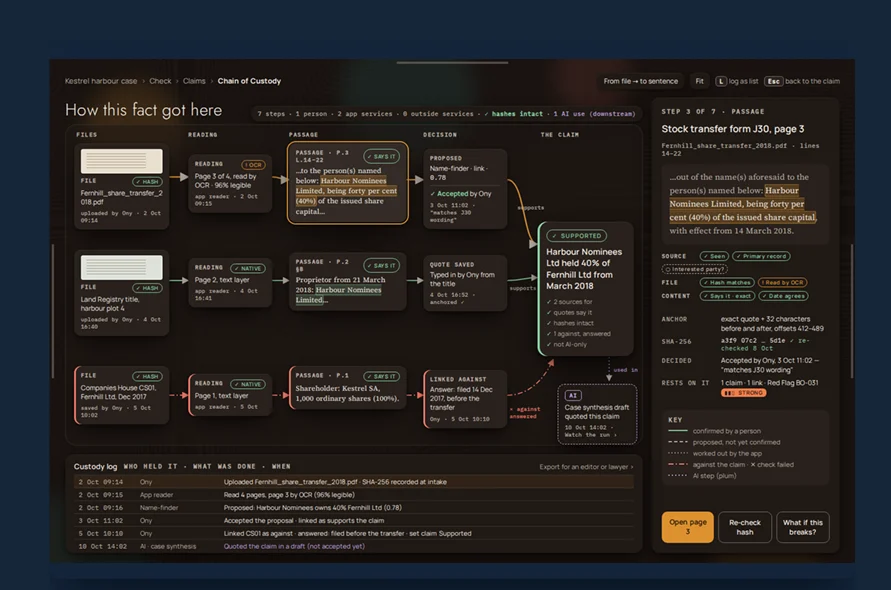
- Tracing a claim to its files without altering the caseThe Workbench's Chain of Custody screen shows how each piece of evidence reached a claim and marks what the app does not store. A change on 19 October made every screen that reads a case leave it exactly as it was.
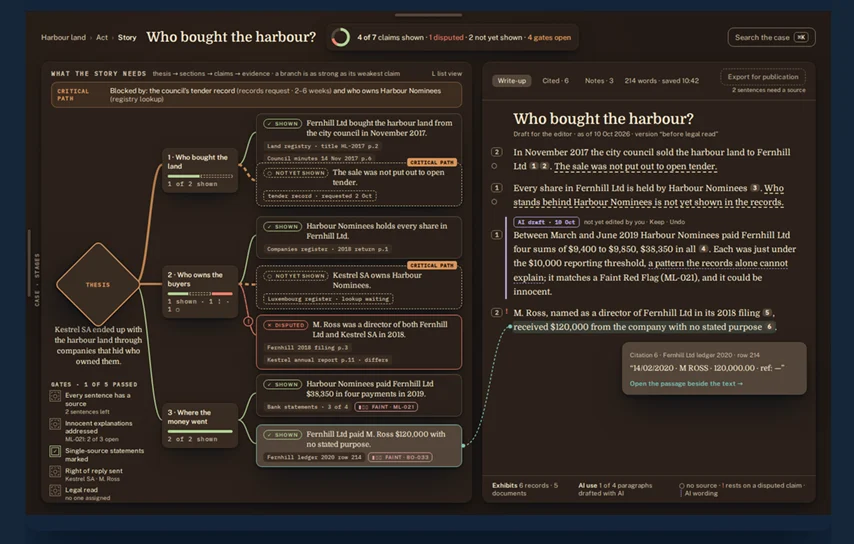
- Five architecture decisions behind the Workbench redesignLocal fonts, a story whose strength is worked out rather than stored, an editor that stores one mark, a glow on its own canvas and a stream that falls back to polling. Each is a written decision record with the options it turned down.
18Sun
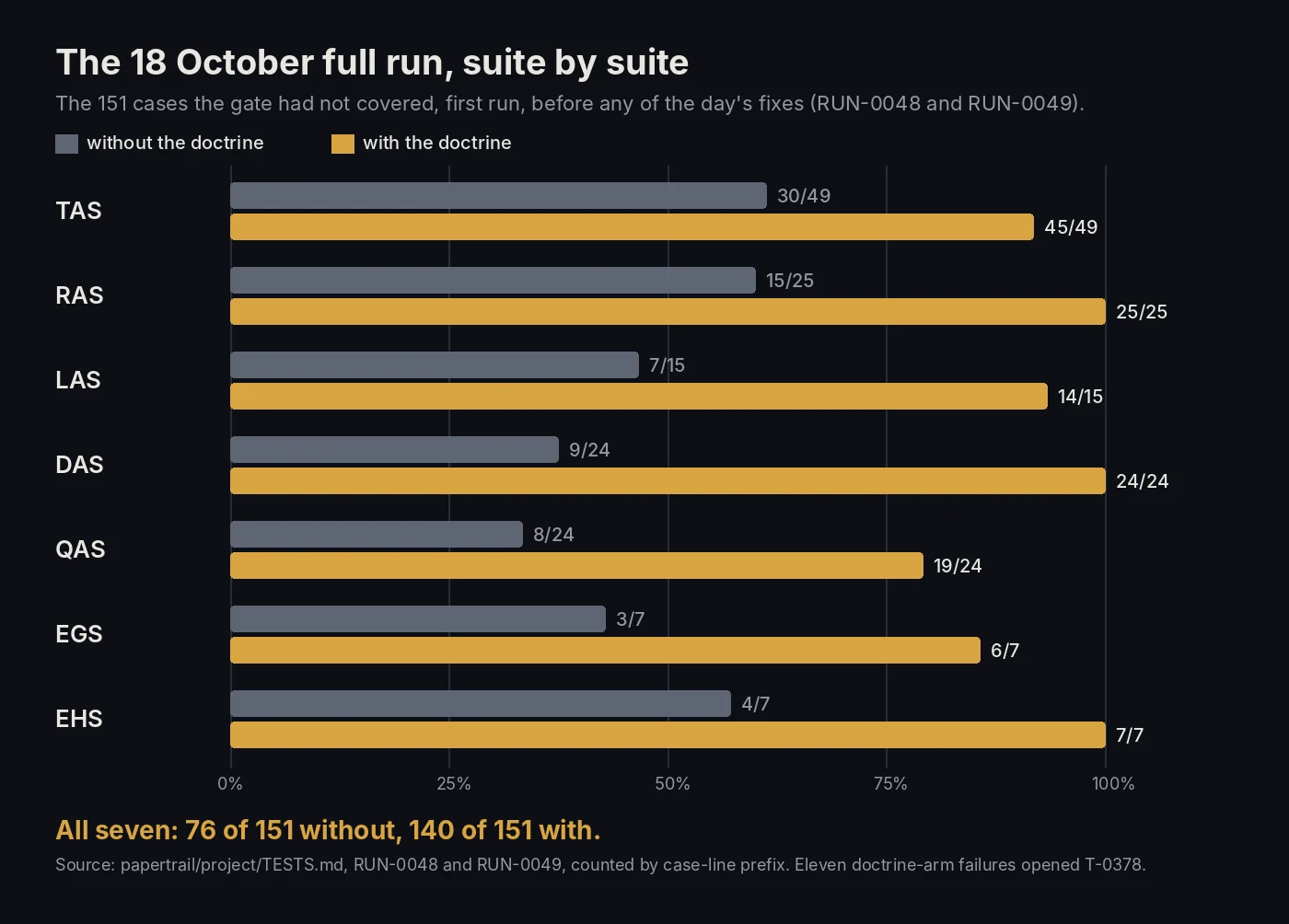
- The full adversarial run and its eleven failuresOn 18 October all seven adversarial suites ran paired: 76 of 151 cases passed without the doctrine, 140 with it. This covers how the eleven remaining failures were fixed and re-tested, and the stopping rule I wrote down.
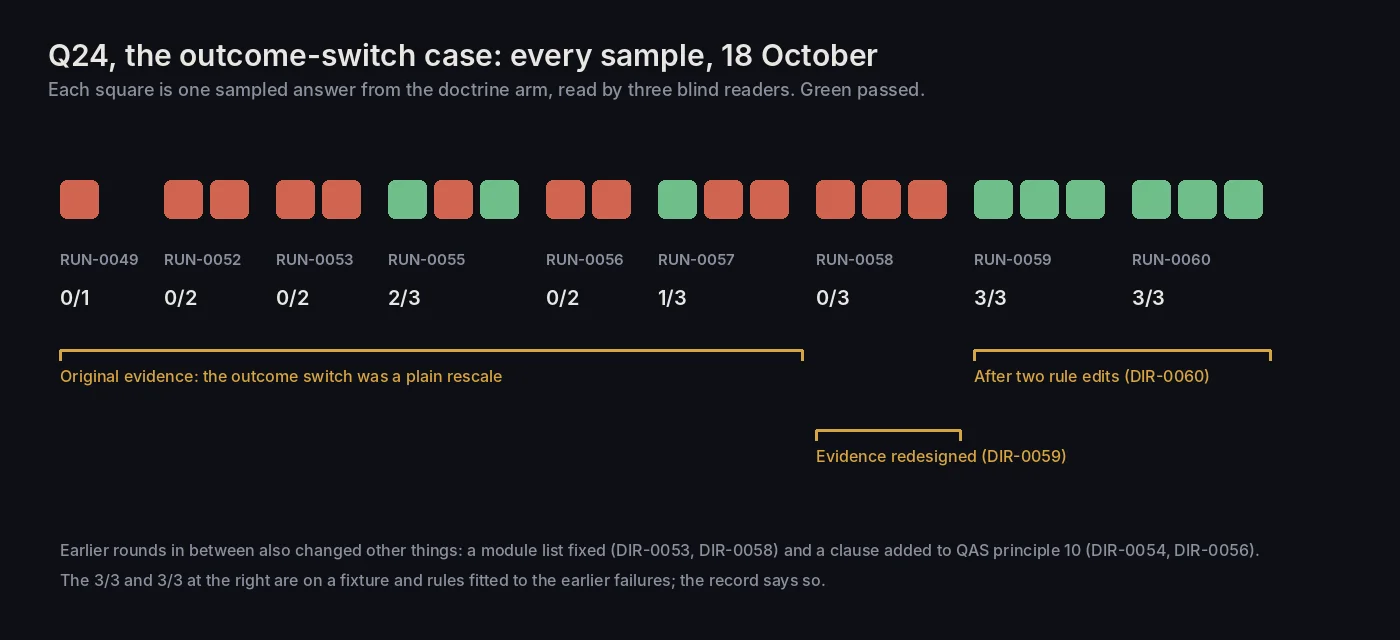
- What it took to pass the numbers rulebook’s hardest caseQAS makes an AI show how every number was produced. Its hardest test case, Q24, took the evening of 18 October to pass, often because the fault was in the test, and the final pass came from rule edits fitted to the failures.
- When to stop testing a rulebookBy 18 October each new round of testing the Authority System Suite found more failures and cost more. The stopping rules written that day set a pass target first, sample before calling a failure, fix the test before the rule and record every deviation.
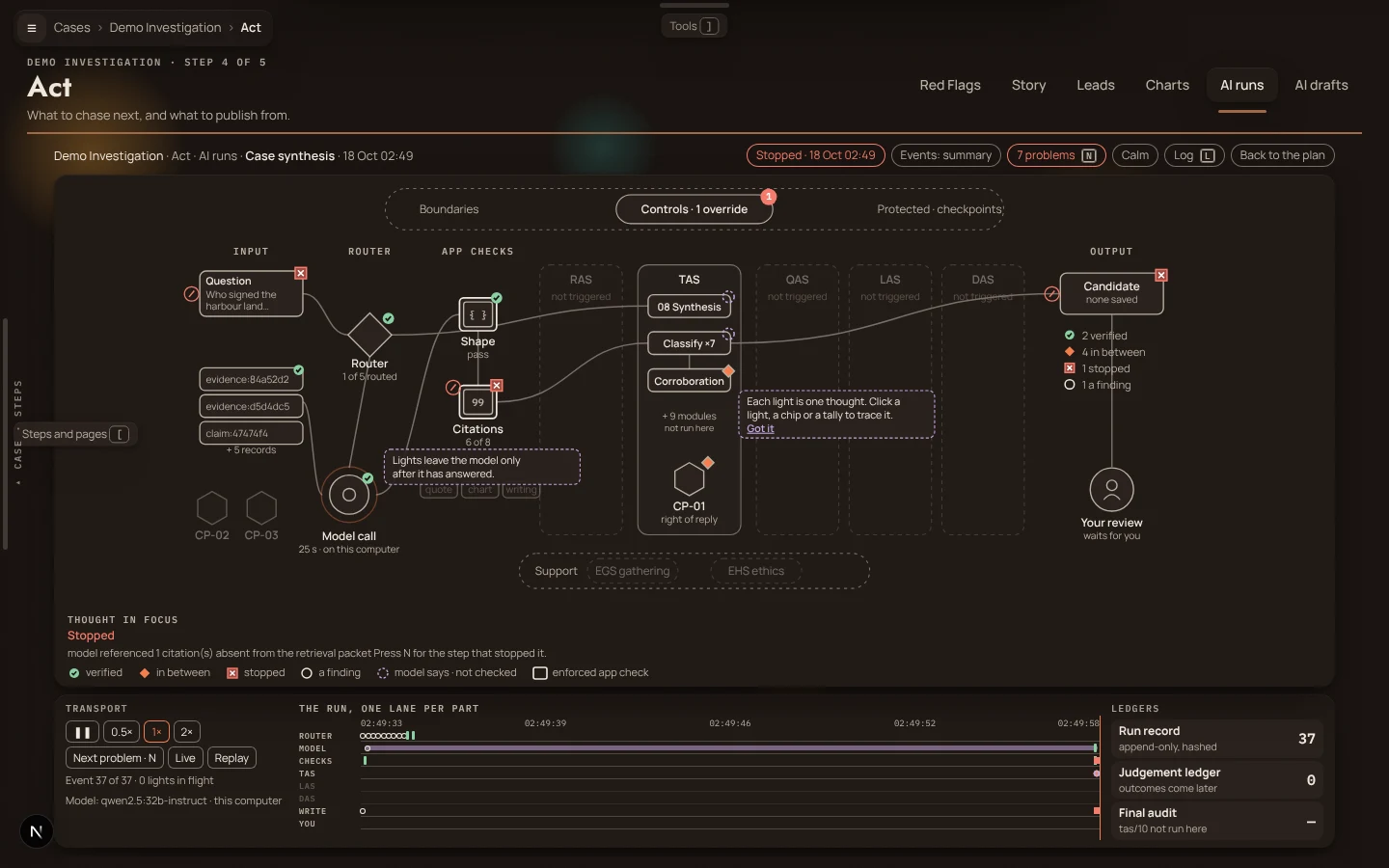
- A step-by-step record of every AI run in the WorkbenchWhen the Workbench's AI runs, every step is written to an append-only record, and the app works out each step's status from its own checks. What the model says about its own work stays marked as self-reported until a check confirms it.
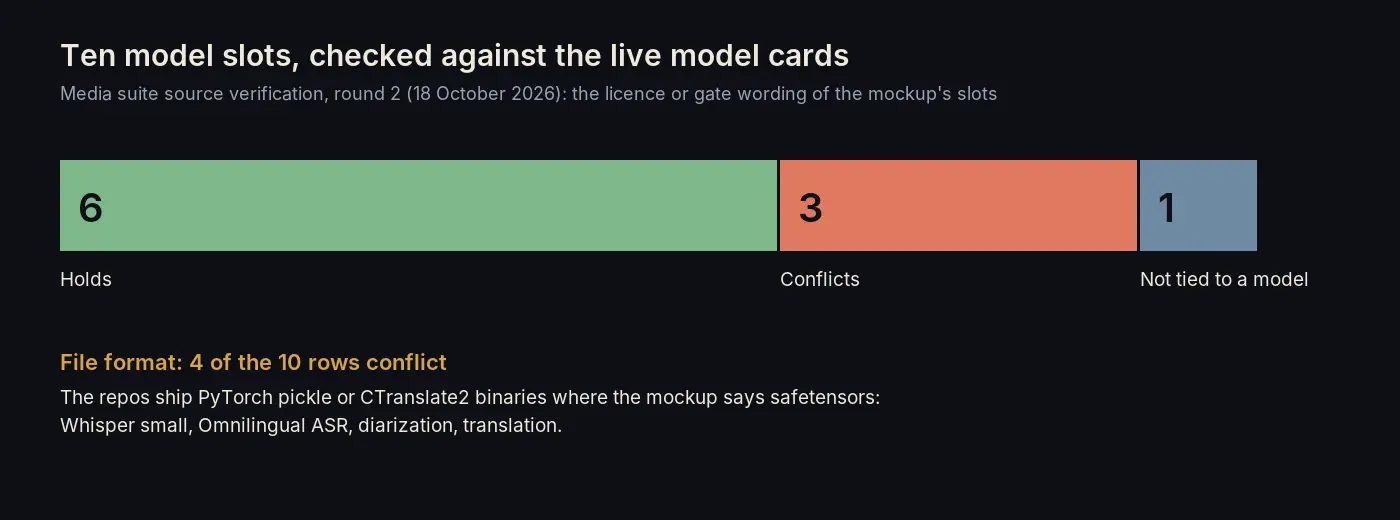
- Checking the media suite plan against its primary sourcesThe media suite is a plan for analysing photos, video and audio in the Workbench. On 18 October its mockup was checked against model cards, licences and papers, and several claims did not hold; nothing of it is built and twelve questions are open.
16Fri
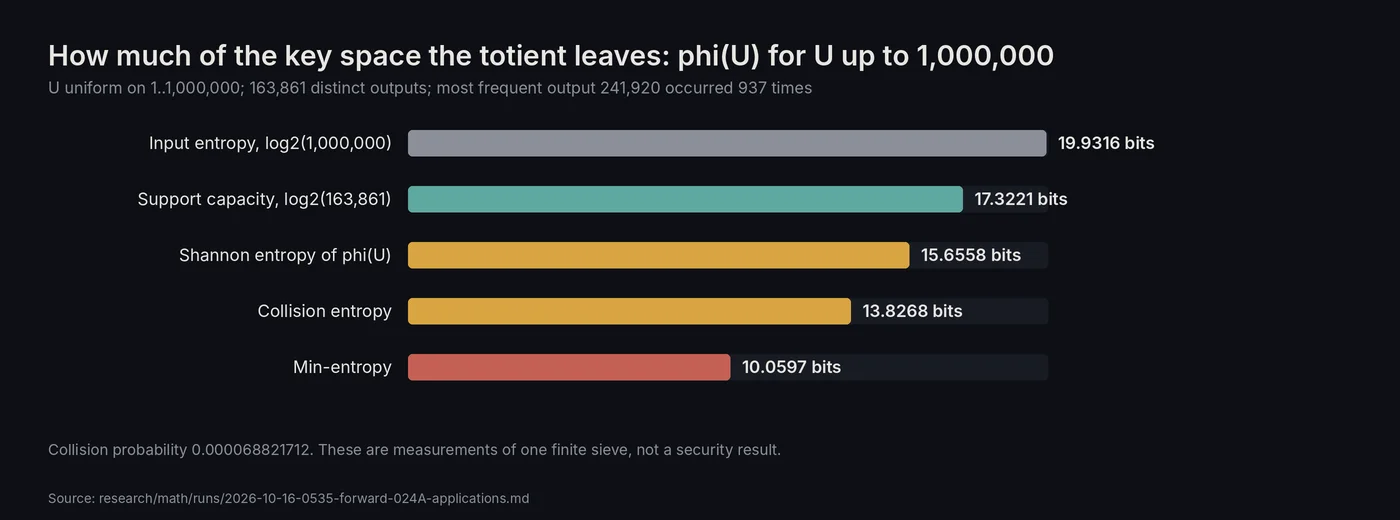
- Auditing a manuscript on the number of distinct totientsOne audit, start to verdict, of a manuscript on how many distinct values Euler's phi function takes. Every finite check passed, but the general theorem is unverified and the printed pages are still unread.
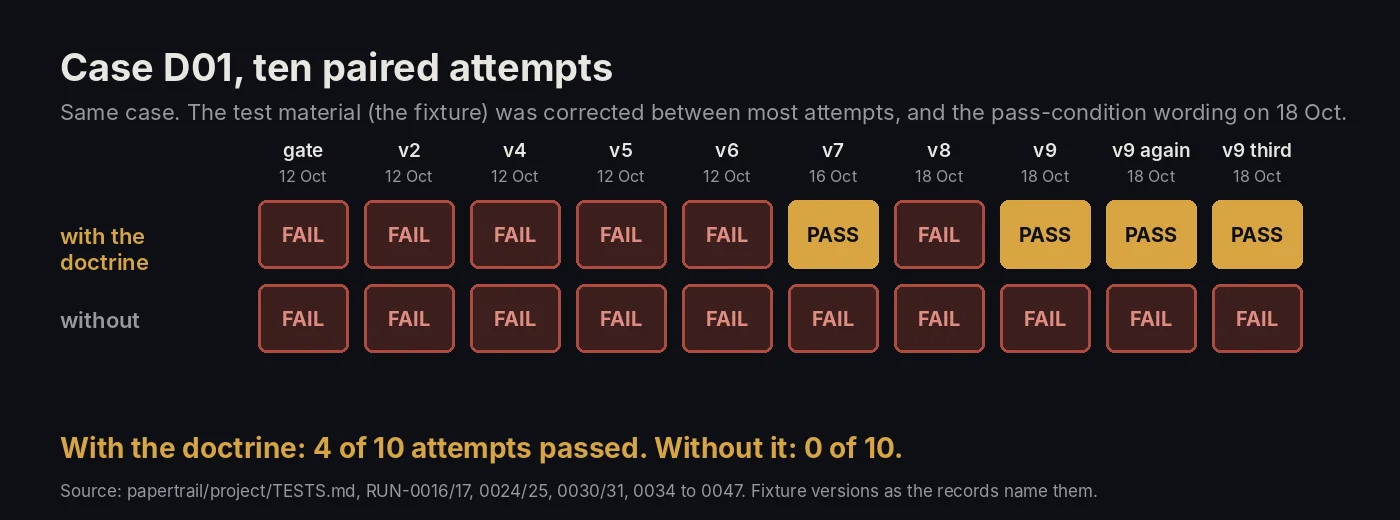
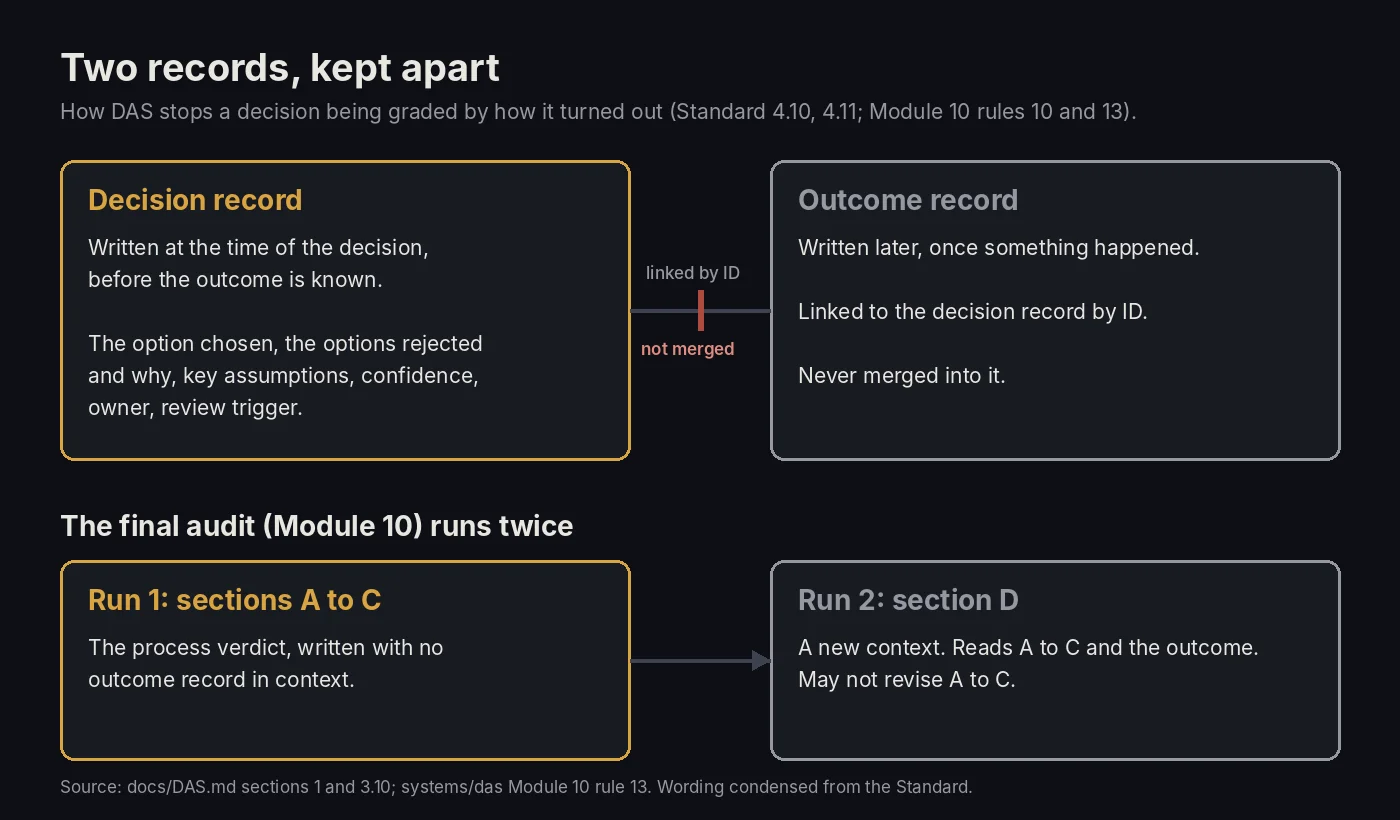
- Testing whether an AI judges a decision by its outcomeDAS, the decision rulebook, is meant to stop a good decision being called bad because it failed. Its test case for exactly that, D01, passed with the rules only on the sixth paired attempt, and one of three readers dissented.
14Wed
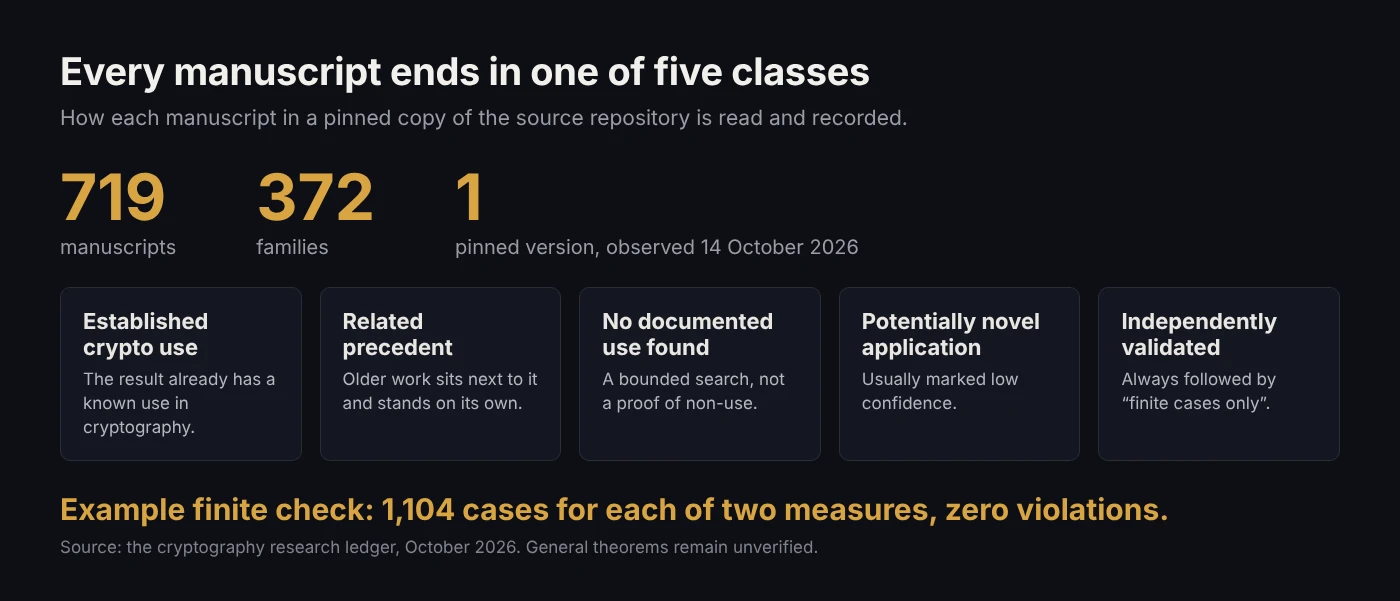
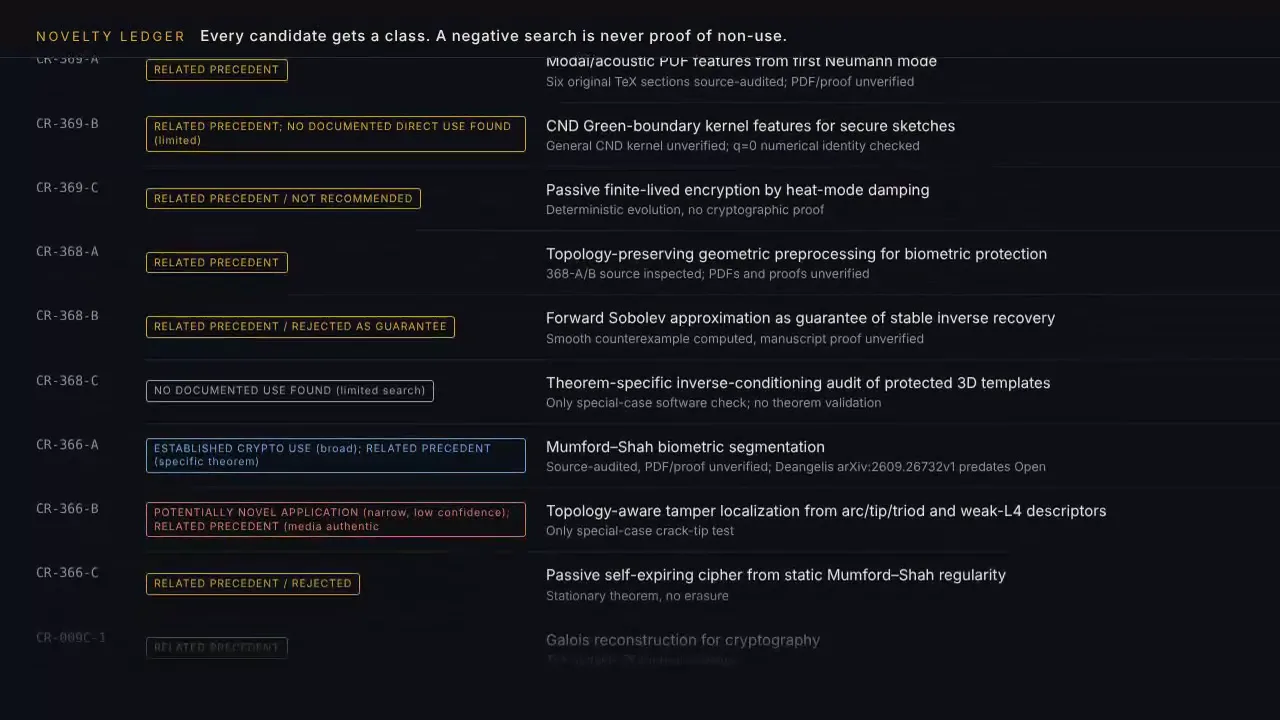
- How I audit 719 mathematics manuscriptsThe source repository holds 719 manuscripts in 372 families. Each run reads one from a pinned version, runs small exact checks, searches for prior art and files it under one of five fixed classes, with the general theorem marked unverified.
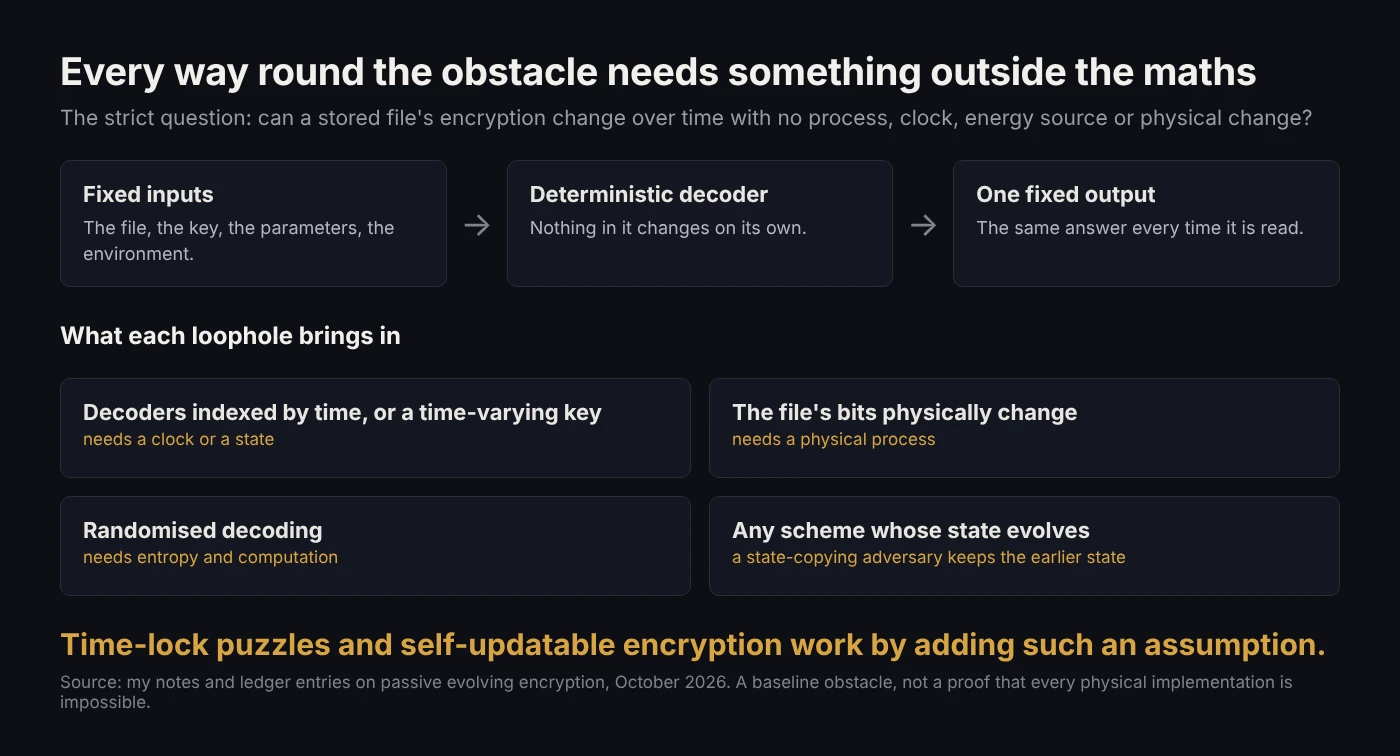
- Can a file’s encryption change by itself?Could the new mathematics make a file whose encryption changes over time with nothing running? Under a strict definition the requirements appear incompatible, and every way round that needs an assumption outside the mathematics.
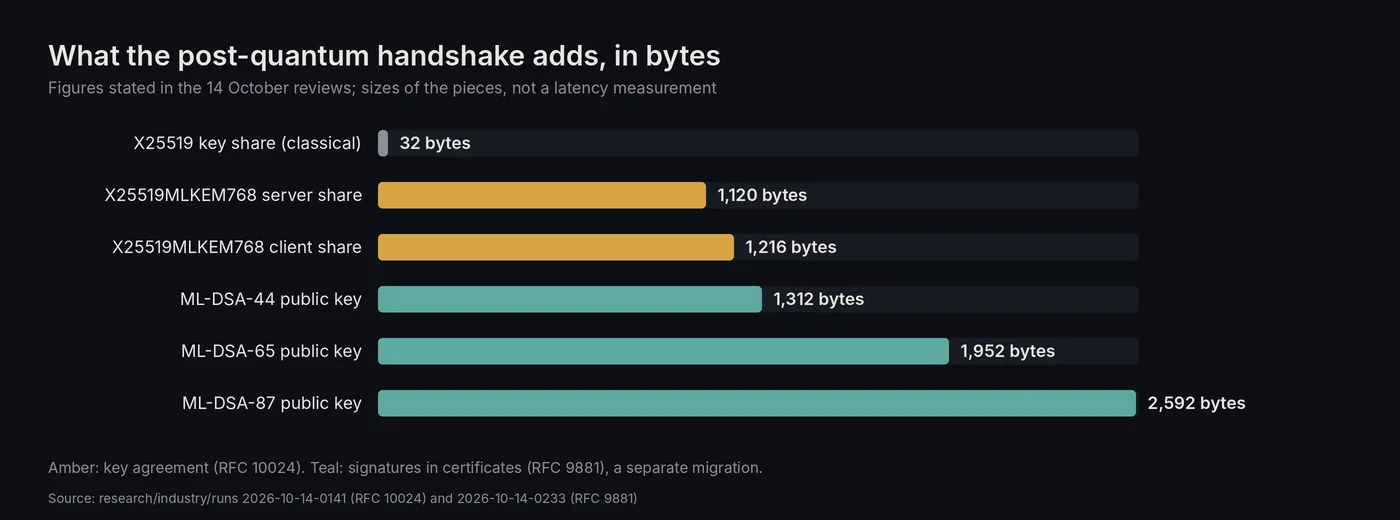
- How much post-quantum key agreement adds to a TLS handshakeHybrid post-quantum key agreement makes a TLS client's key share 1,216 bytes where a classical one is 32. A review of primary sources from 14 October also sets out what is standardised, what the NSA's 1 October note requires and which quantum results are measurements.
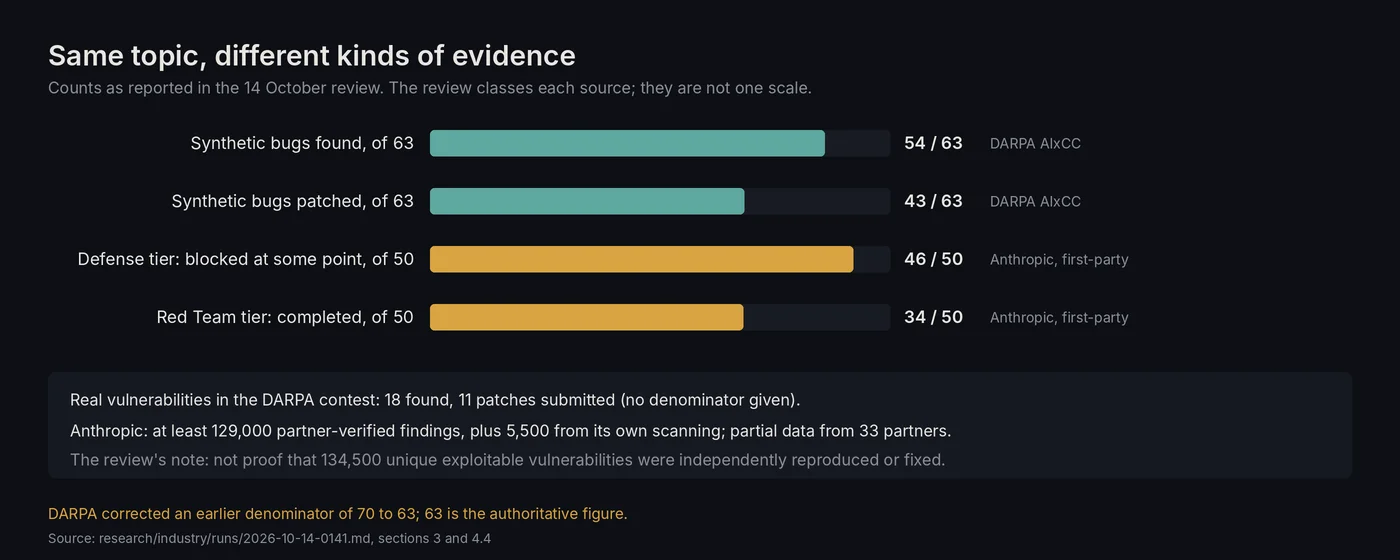
- Who measured the AI cyber agents’ results?Of the reported results for AI cyber agents in the 14 October review, only DARPA's contest had an outside referee. The vendor figures are vendors reporting on themselves, and no independent validation of them was found.
Nothing matches that.
Get in touch.
I'm open to creative technical project management, founding teams, and agentic AI engineering and research. I read everything that comes in, and I answer.
onysnowstudios@gmail.comLinkedIn →
