Most screens end where the picture ends. The Opallite Canvas is designed so the picture keeps going: a seamless 4K touch display that wraps around the sides, under one continuous piece of glass.
The one-sentence spec
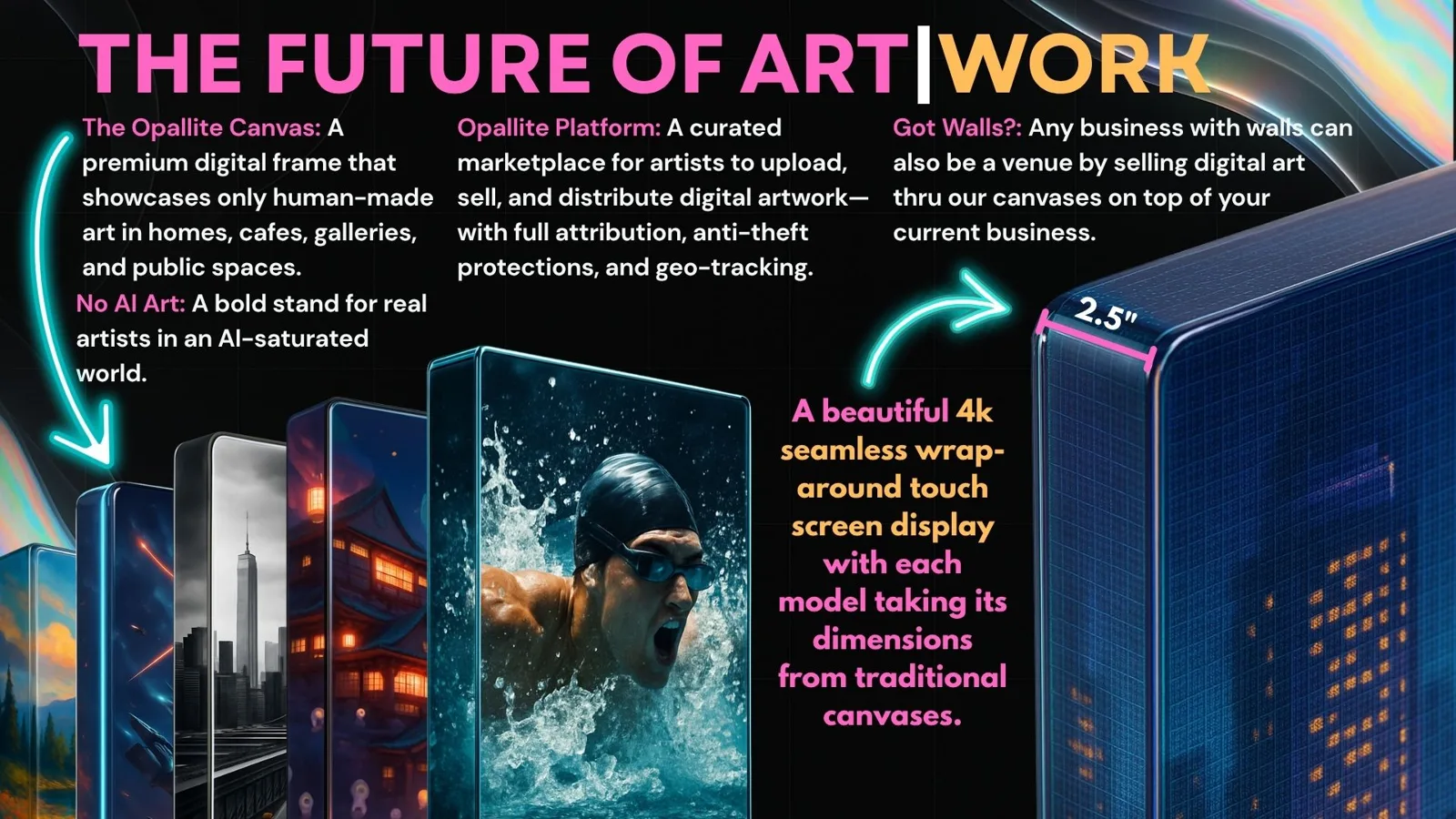
Slide 3 of my deck, "The Future of Art | Work," puts it like this: "A beautiful 4k seamless wrap-around touch screen display with each model taking its dimensions from traditional canvases." One number is marked on the slide's render, because it decides how the piece sits on a wall: 2.5 inches of depth.
Wrap-around, not framed
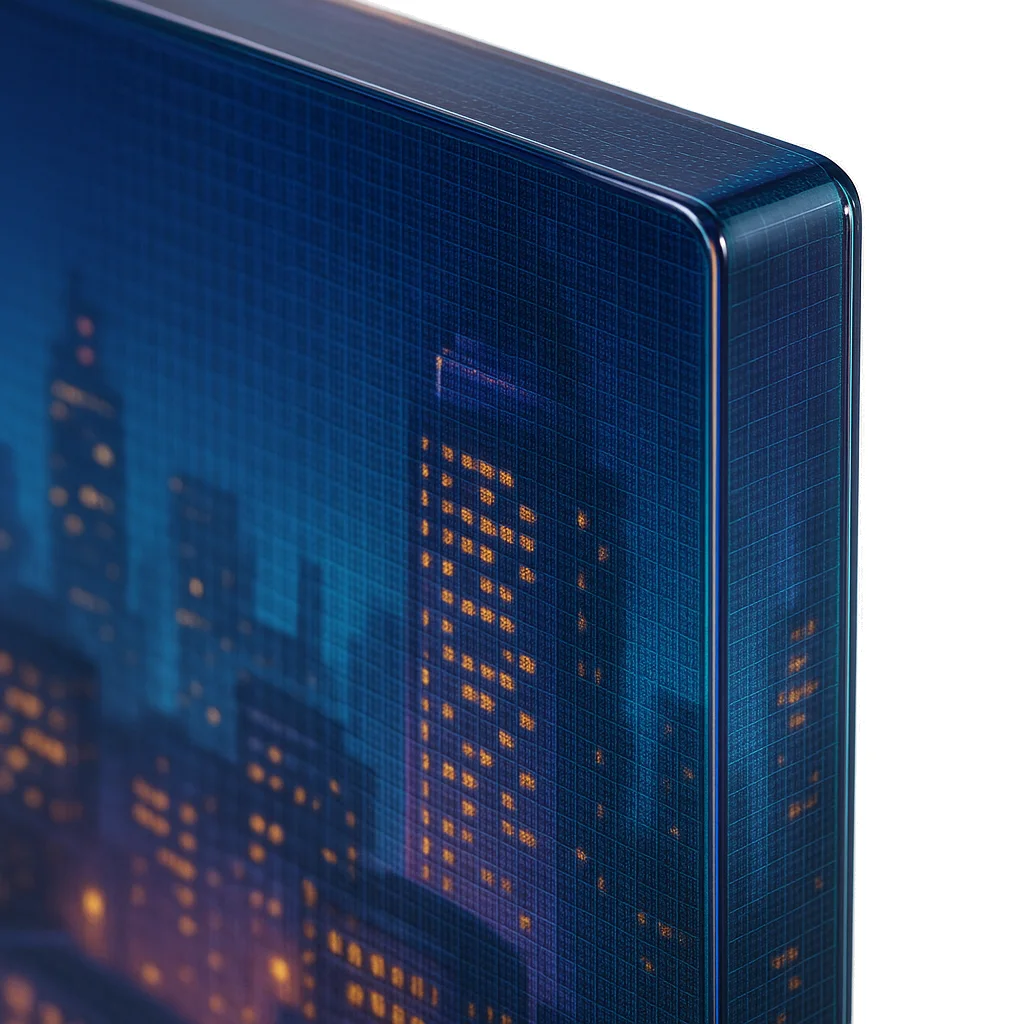
My plan's hardware chapter describes a screen that runs across the front and continues around all four edges, "a continuous visual experience that transforms two-dimensional digital art into a three-dimensional presence." The aim is to remove the line a bezel draws between the art and the room. The chapter compares it to a sculpture, which exists in three dimensions, instead of a flat image.
Over the display sits one glass layer that follows its contours. In the plan it is about half an inch thick with a 0.375-inch corner radius, and it is permanently bonded to the screen with no air gap, so you read one object rather than a screen behind glass. The glass also carries the touch layer: navigation, settings and basic content management first, richer interaction later.
The glow
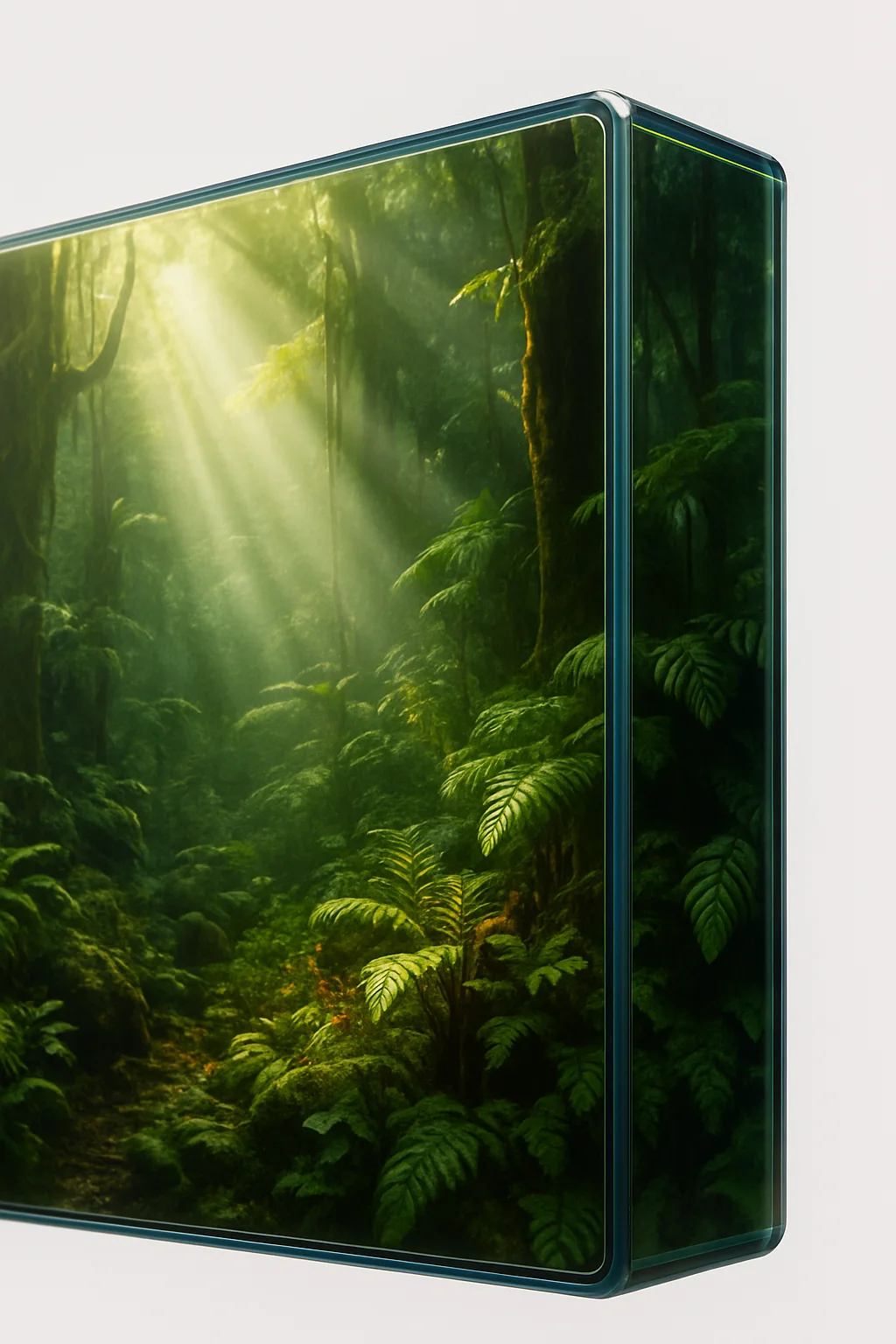
Light comes off the edges and makes a halo around the artwork. The plan gives three reasons: it extends the piece beyond its physical edge, it lets a painting's colours set the mood of a room, and the backlight helps contrast in difficult light. The glow is meant to be adjustable, from subtle to pronounced.
Sizes artists already know
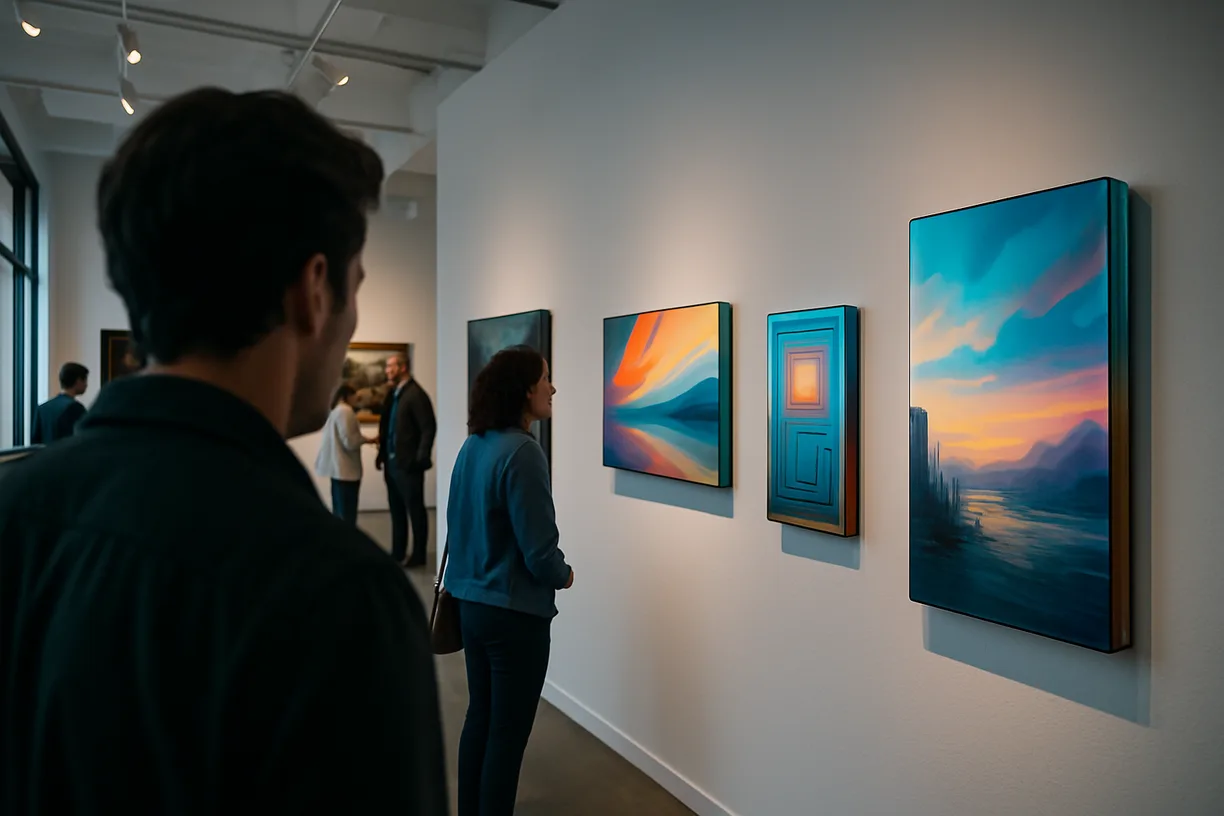
If an artist works at 24 by 36 inches, the canvas should be 24 by 36 inches. The plan lists these launch sizes:
- Standard canvas: 16x20, 18x24, 24x36 and 30x40, portrait and landscape
- Movie-poster: 27x40 and 24x36
- Square: 12x12, 16x16, 20x20 and 24x24
- Panoramic and specialty: 36x12, 12x36 and 48x24
Every size keeps the same 2.5-inch depth. Familiar formats mean existing digital collections fit without reworking and nobody has to learn a new aspect ratio.
Testing the idea without hardware
I have not built the canvas, so I wrote a specification and used it to produce AI-generated concept renders of eight scenes: an upscale cafe, a modern gallery, a boutique hotel lobby, a living room, a fine dining restaurant, a cinema lobby, a cocktail bar and a corporate reception. Every scene asks for the same things: no frame or bezel, a single seamless glass layer, a 0.375-inch corner radius, a glow from every side, and a faint pixel texture under the glass. Each lists sizes that suit the space, such as a triptych for the hotel lobby and a movie-poster-sized piece for the cinema.
What these numbers are
Design targets for a product at concept stage, Technology Readiness Level 1 to 3 in my deck. A real depth will come from real components, and nobody has tested any of this.
A place to stand
The first post was about art with nowhere to go. This is my attempt at a somewhere: an object that looks right on a wall, shows only human-made work, and never looks like a screen waiting for its screensaver.
