I have been an artist all my life, and once I started college I fell in love with digital art. Opallite begins with the thing I kept running into: digital art is everywhere, and almost none of it has a place to live.
One slide, four problems
The second slide of my pitch deck is titled "All Pixels, No Purpose." On it I drew a phone's photo albums: Recents with 2,346 items, Favorites with 150, WhatsApp with 37, and one called "Cool Art" with 73. A neon arrow points at it, labelled "R.I.P." That is where digital art goes once someone likes it. It gets saved, and then it gets buried.
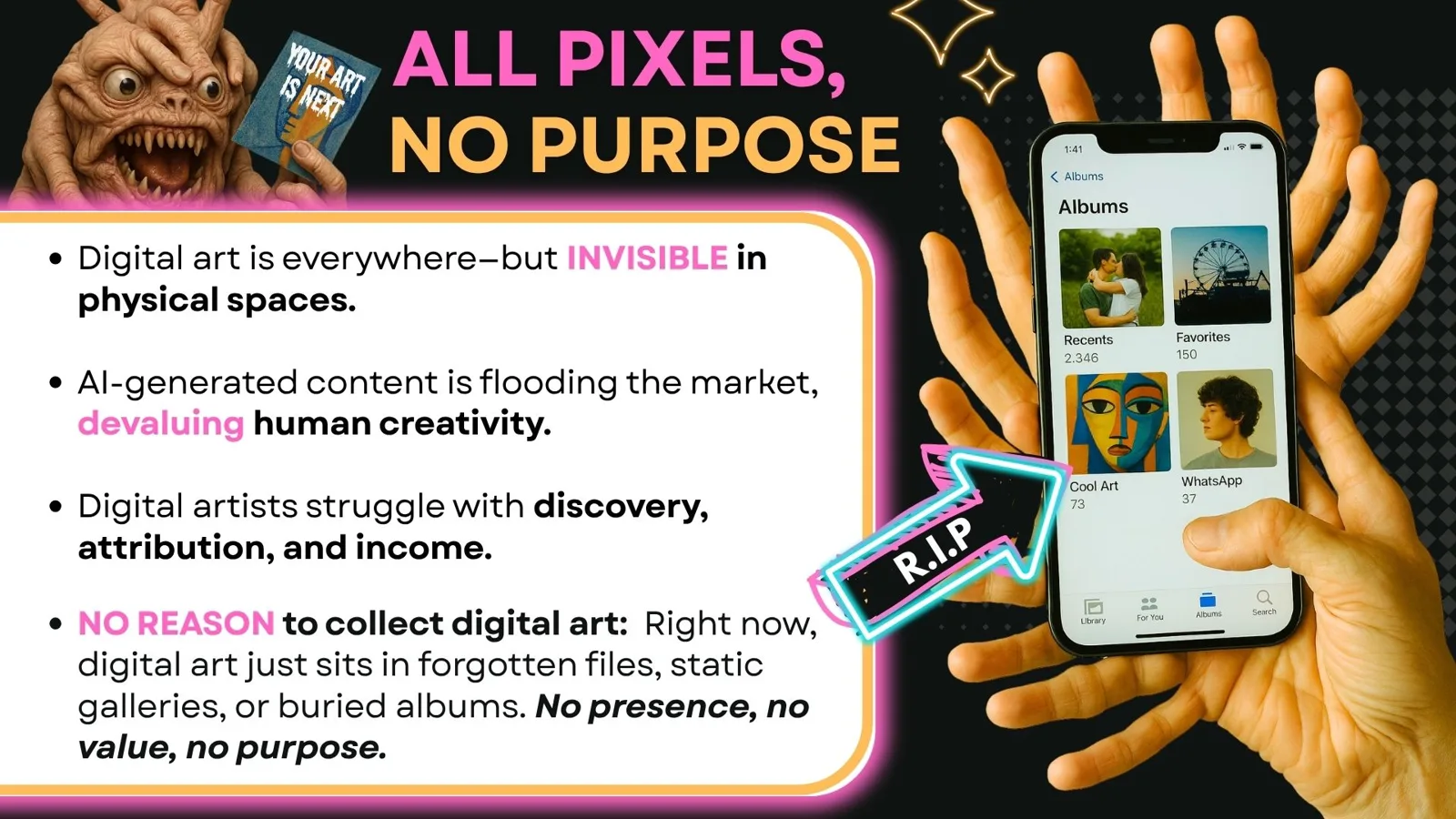
The slide makes four claims.
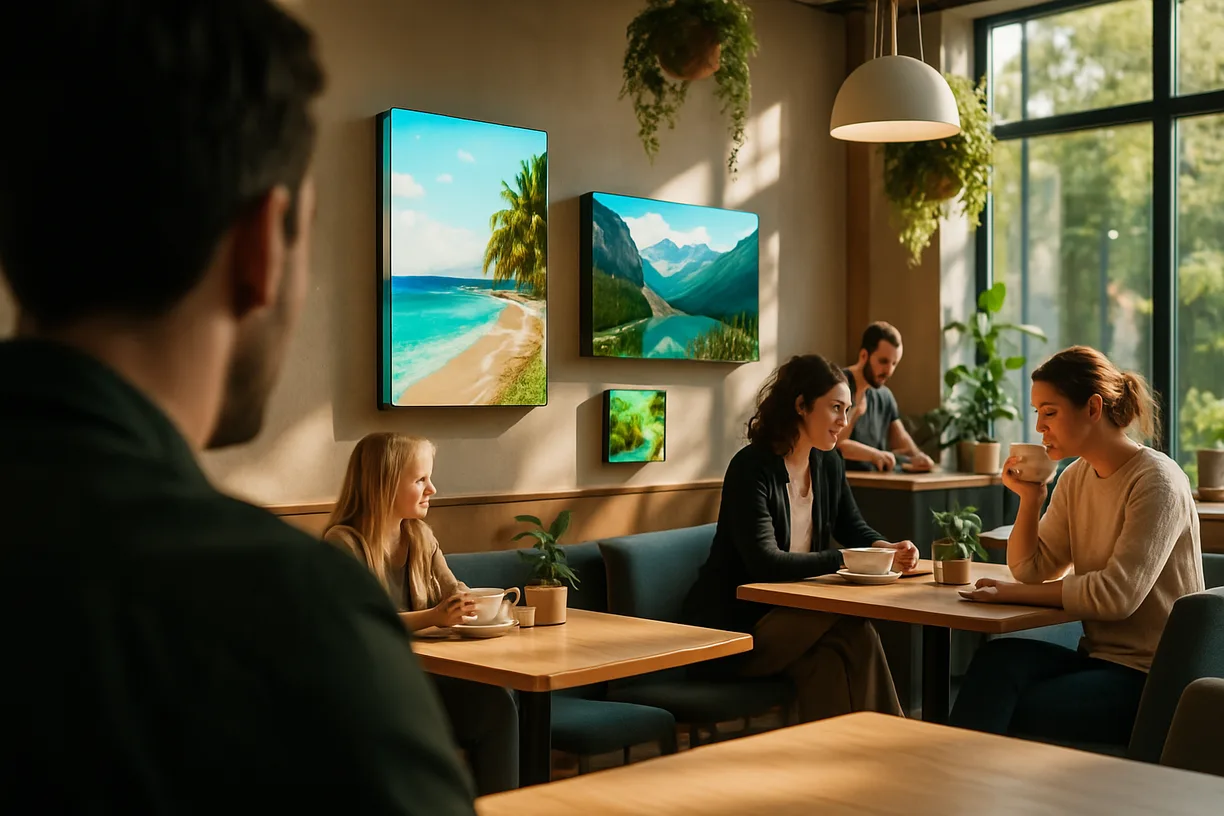
It is invisible where people actually are. "Digital art is everywhere, but invisible in physical spaces." A painting hangs in a cafe, a lobby, a living room, and someone walks past it. Digital work rarely gets that moment.
AI is flooding the market. The slide says AI-generated content is "flooding the market, devaluing human creativity." In my Deep Dive analysis I wrote it from the artist's chair: "Imagine being a modern digital artist: Anyone can generate art that is equivalent or superior to you instantly and it might even be in your style."
Artists cannot be found, credited or paid. The slide says digital artists struggle with "discovery, attribution, and income."
Nobody has a reason to collect it. This is the line I care about most. Right now, the slide says, digital art "just sits in forgotten files, static galleries, or buried albums." Then the verdict: "No presence, no value, no purpose."
Art you looked at for years
The same Deep Dive has a line about my generation: "we read the game manuals that came with the game just to look at the art inside." People who grew up that way already treat game art as art. What they lack is a place to put it on a wall.
I also know where the idea became personal. During a video call, my daughter was colouring with crayons, paused, and told me: "I wanna be an artist." I later wrote that Opallite was born in the ashes of that moment.
My application answers compress the problem into two sentences: "Digital art is everywhere, but it has nowhere to go. Opallite gives it a home in the real world."
The answer has two halves
The rest of the deck is built from two parts that need each other:
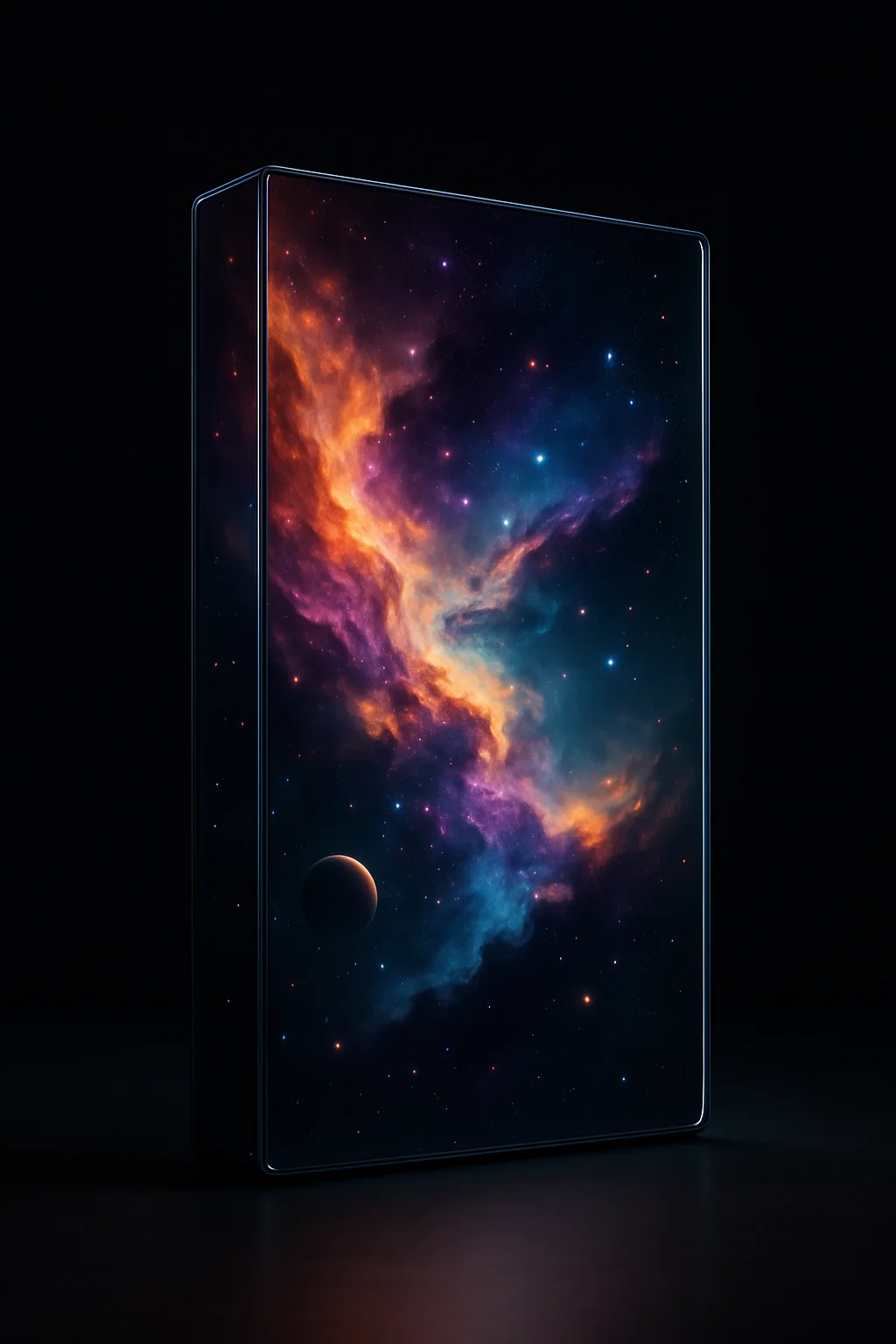
- The Opallite Canvas, a premium digital frame that shows only human-made art in homes, cafes, galleries and public spaces.
- The Opallite Platform, a curated marketplace where artists upload, sell and distribute work, with attribution, anti-theft protection and geo-tracking.
The next post is about the canvas. After that comes the money.
Where it stands
Opallite has no revenue, no signed partners and no shipped hardware. My deck puts the technology at Technology Readiness Level 1 to 3: concept stage. What exists is a problem I believe in, a design for the answer, and a large body of research and design work that I did alone. This series puts that work in public.
If you make digital art and the camera-roll problem sounds familiar, I would like to hear how you deal with it today.
