The lightengine.
The frosted glass, the lamp you carry, the shadows, the rain and the broken glass on this site aren't images or presets. They're simulated in the browser from the physics of light and water, and checked against references until they hold up.
- My role
- Creative and technical direction: the look, the research questions, every approval
- When
- Since Sept 2026, live on this site
- Built with
- WebGL shaders, TypeScript, React; Python and Julia offline
- Scale
- 180 effect modules · 650+ automated tests · 390+ commits
The brief.
My photographs are cinematic: wet streets, neon, glass. I wanted the site around them to feel like the same world, a room you look into through a window on a rainy night, lit by a lamp you move yourself.
Faking that with pictures falls apart the moment you move. So every surface is a material, every light is a light, and what you see is computed from where they are.
Method.
The first rain looked like ink. Instead of tuning it by eye, I set it beside real photographs and asked what was physically different.
The answer was a list of causes, most important first.
- 1
A real drop is a clear lens that holds a sharp, upside-down picture of what's behind it.
Ours averaged half the photo into one muddy colour.
- 2
A drop transmits about 94% of the light.
Ours were tinted by the pane, like dye.
- 3
A street lamp is hundreds of times brighter than its surroundings, so it survives as a sparkle in every drop.
Our photo topped out at white.
- 4
Real rims are thin dark lines, bright only on the side facing a light.
Ours glowed all the way round, like glass beads.
- 5
Light passes through a drop and focuses.
Ours cast nothing, so drops never glowed near the lamp.
Two rules
Each effect starts with a research pass: the best prior work ranked (the rain is built on the architecture of ATI's ToyShop demo and Kaneda's water simulation), the physics with numbers, and dozens of reference photographs, 96 for the rain alone.
New effects run behind a preview switch until I've looked at them from several views and signed them off.
Two parts.
The work splits into two parts that depend on each other. The light and shadow system came first and is the foundation: lamps, glass, one shadow model.
The water came second and plugs into it, which is why rain on this site is lit and shadowed like everything else rather than pasted on top. Each part has its own page, with the questions I asked, the changes of direction and the clips.
Light & shadow
A lamp that lights from what is really between it and the wall; glass with real edges; one shadow model; prints that catch the lamp; glass that breaks the way glass breaks.
Read this part →Water, rain & wind
Drops that are lenses, streams that run and clear a track, drips, and wind, measured against real footage frame by frame.
Read this part →How it waschecked.
“Looks right” isn't a test.
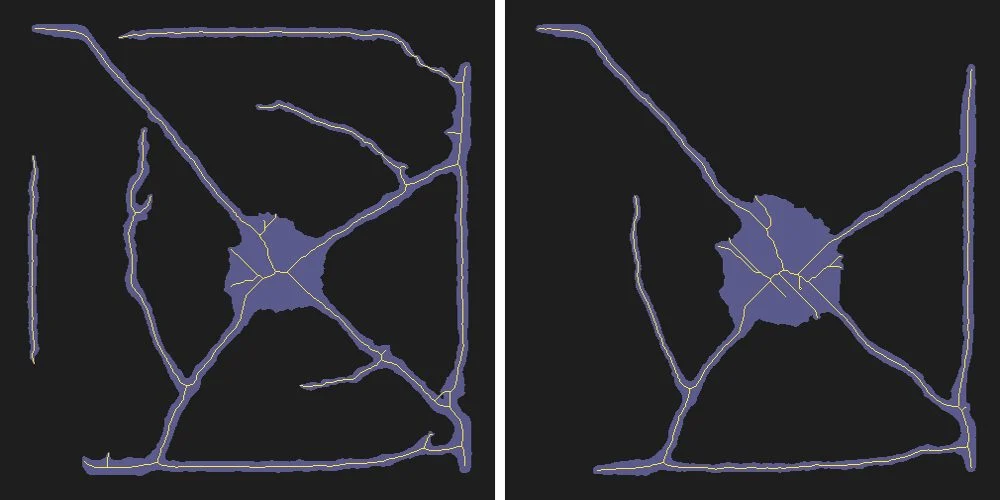
For the rain, I built a physically accurate scene in Mitsuba 3, a research path tracer: drops with a real contact angle on glass of a real thickness, lit by a lamp, then rendered slowly and exactly. The real-time effect is compared with it, and a small ray tracer works out the shadow and the focused bright core each drop throws.
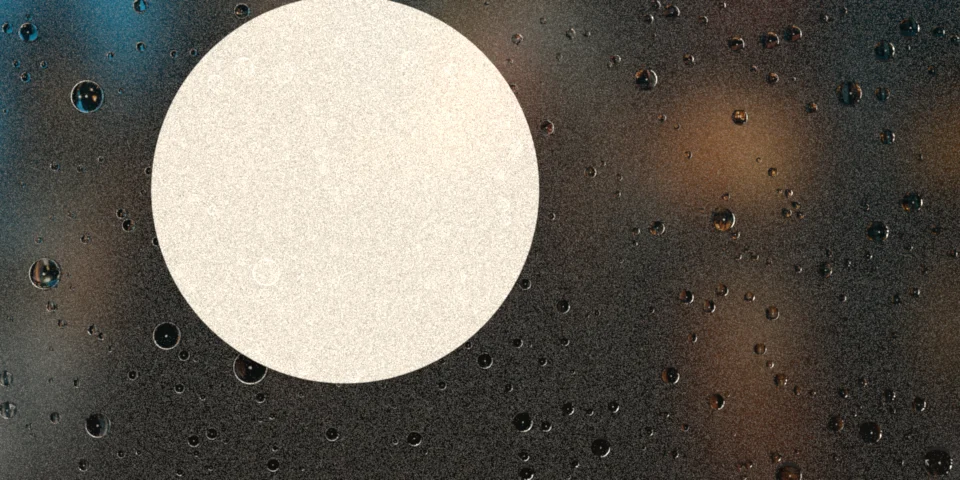
A simulated strike, frame by frame. Drag to step through it.
For broken glass I went further.
Breaks are simulated offline with peridynamics, a fracture model from materials science, then measured the same way 60 hand-traced panes from standard ballistic-glass tests were measured: cracks crossed on circles round the impact, junction shapes, and how piece size grows with distance.
Only breaks that match the real statistics become the library the site plays back.
Engineering.
- 180 effect modules
- Optics, light, materials, water, camera, scene.
- 650+ automated tests
- Including the shaders' maths and the light's occlusion.
- A lab
- Live controls for every effect, so I can tune by eye and save what I choose.
- Reduced motion
- Reduced-motion versions of the moving effects.
- Photographs
- Served in responsive sizes, with a blurred placeholder and no layout shift.
Reused in a product
The same engine now gives the Journalism Workbench its Rain Noir theme. A creative system built once, well, became a product feature.
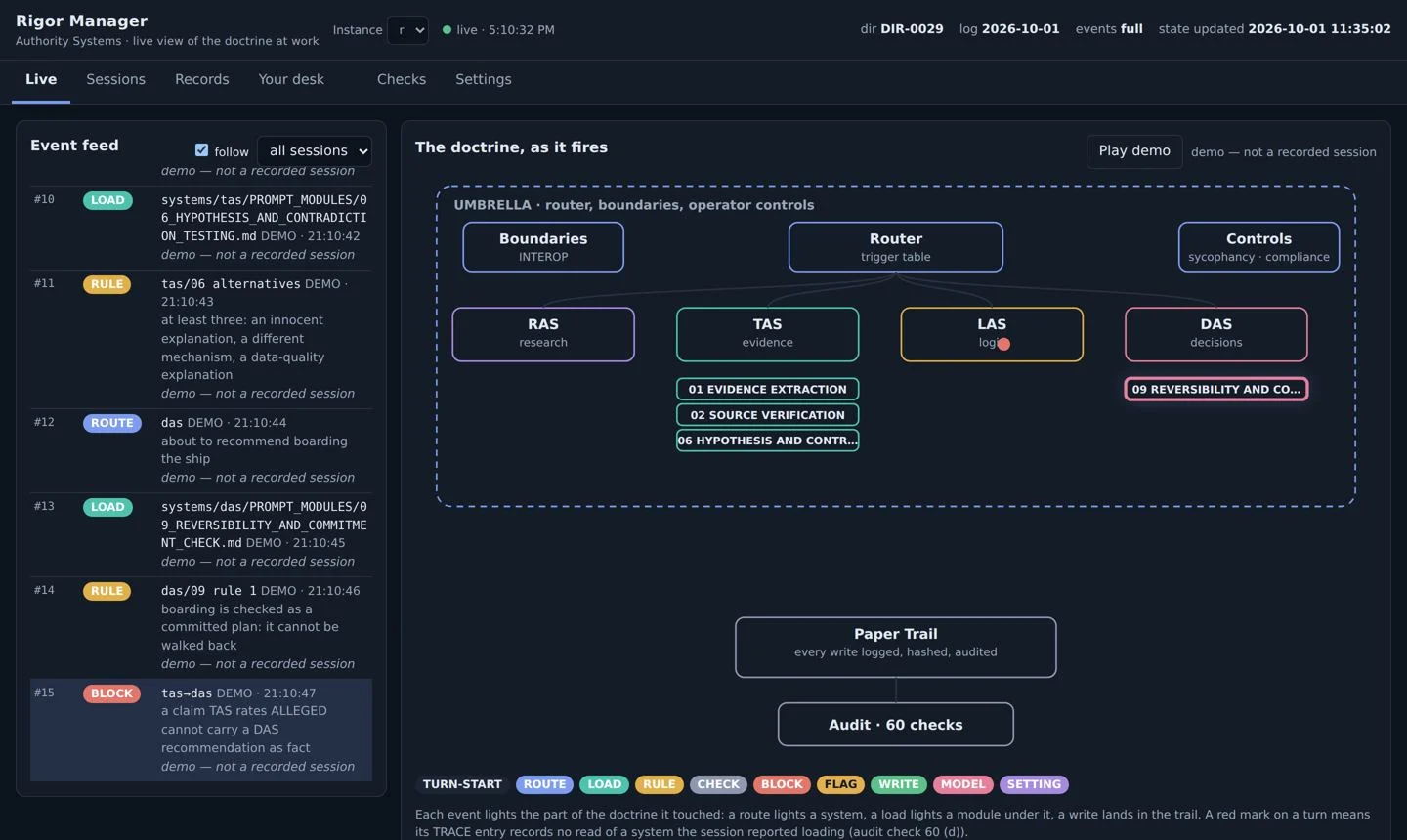 Authority System Suite↗
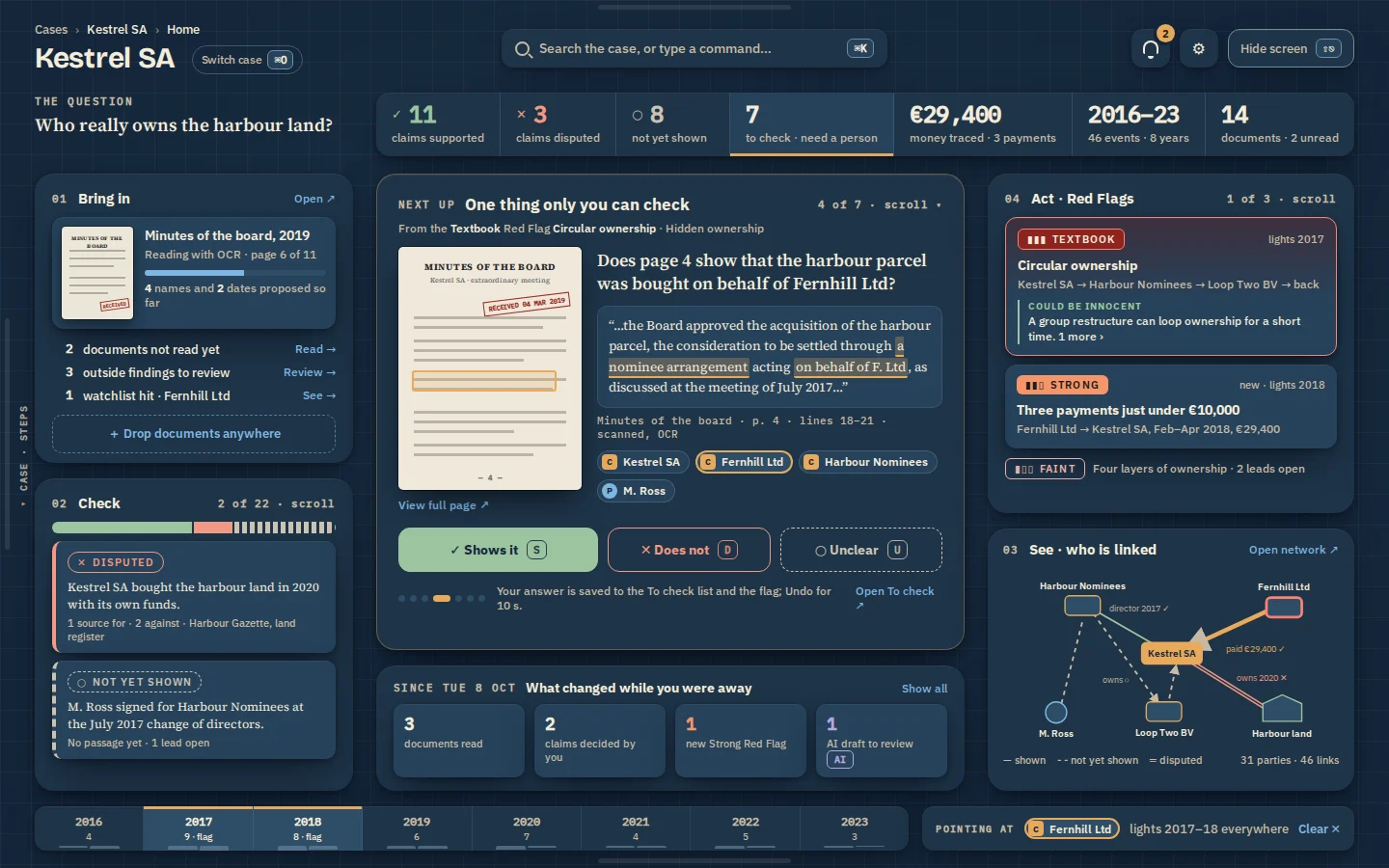 Journalism Workbench↗
 Opallite↗
Get in touch.
I'm open to creative technical project management, founding teams, and agentic AI engineering and research. I read everything that comes in, and I answer.
onysnowstudios@gmail.comLinkedIn →
