Water, rain& wind.
Rain beads on the glass, merges, grows heavy, runs, clears a track and drips off the edge, pushed by wind, and every drop is a lens that carries the lamp's light. This part is how I got there: the questions I asked, the footage I took apart frame by frame, and what I still haven't got right.
- My role
- Creative and technical direction: the questions, the references, every approval
- When
- 1 to 11 October 2026
- Checked against
- 117 photographs, 233 hand-traced streams, 6 rain clips (21,834 tracked drops), a path-traced scene
- Built with
- WebGL shaders, a drop-physics simulation in TypeScript, Mitsuba 3 offline; built with Claude Code
“Why do the dropslook like ink?”
My note on the first version, 1 October 2026
The first rain was technically rain. It had drops, they ran, they merged. It still looked wrong in a way I could see and couldn't name, and that's the situation where an artist is most useful to an engineer: the wrongness is obvious, the cause isn't.
So I asked a different question: what is physically different between ours and a photograph of real rain? Not “what looks different”. What is different. The answer, once I made the build lay real photographs next to ours, was a list of seven causes. The first three carry most of it.
- 1
A real drop is a clear lens. It holds a sharp, upside-down picture of what's behind it.
Ours averaged half the photograph into one muddy colour.
- 2
A drop passes about 94% of the light.
Ours were tinted by the glass, like dye.
- 3
A street lamp is hundreds of times brighter than what's around it, so it survives as a sparkle in every drop.
Our picture topped out at white, so shrinking it left murk.
The seven causes came from comparison and measurement. What started it was one word: “ink”. It pointed straight at colour and transparency, which is where the answer was. An eye is a fast way to find the question; the engineering is the slow way to answer it.
Fixing it wasn't the end. I asked again: “Are you sure the refraction, shadow, specular highlights and reflections are correct for the drops?” Every effect gets that second question before it ships.
Frame by frame.
Eight frames from the rain clip, a few frames apart, cropped on one patch of glass. A drop slides, a stream forms and runs the length of the crop, and most drops stay put, which is what the footage said they should.
Rain on glass moves too fast and too irregularly to judge in real time, so I stopped watching it at speed. I took six clips of real rain on a window, tracked drop by drop, and read the tracks like data. What came out was surprisingly specific.
- 21,834
- drop tracks, across six clips of real rain on a window.
- ¼ frame / s
- A runner's front moves about a quarter of the frame height a second.
- 1–2 s
- A stream lasts a second or two, and about half of them start at the top edge.
- 76–92%
- of drops never move at all.
- 0.17 s
- Small drops don't slide smoothly: they go in 0.17-second bursts with rests of 0.6 to 1.1 seconds between, stuck, then slipping, then stuck. A smooth slide looked wrong because it was wrong.
Then the same thing in reverse, to check our own water. Software rendering draws a frame every few seconds, so a normal screen recording would show the effect at the wrong speed. So the effect has a switch for a fixed time step: advance the simulation exactly one twelfth of a second, wait for the frame, save it, repeat. Played back at twelve frames a second it is the true speed of the water, however long the machine took to draw it. The clips on this page were made that way.
Measure the real thing first, then match it with numbers. Not “make it a bit slower”: make front speed 138 pixels a second in a frame 552 tall, because that's what the footage said.
Every drop isa lens.
Once the causes were on a list the fixes were nearly mechanical, which is how you know a list is right. Each drop now images the scene a real distance behind the glass, so it shows a small, sharp, upside-down picture with the bright points carried through at their real brightness. The water has no tint. The rim is bright only where a lamp lines up with it, because a real rim is a thin dark line, lit by whatever its reflection meets.
Tiny droplets went from dark dots (which read as ink spatter) to sparkles. Big flat drops magnify instead of shrink. The result isn't a drop texture: it's what you'd get if you pointed a camera through them.
Streams & drips.
“The streams are going right on top of the other rain drops and don't absorb them organically, the streams still don't look like real streams like the photos.”
My note, 9 October 2026
This was the long one, and it was a change of direction. My first instinct was to make streams a drawn line the drops ran along. The note above is why that was wrong: a real stream is water, so a stream and a drop it touches are one body of water. So the plan flipped. A stream became a lane the simulation owns, at the width it's drawn, for as long as it's drawn, and a drop that touches a lane joins it.
We measured the old behaviour before trusting the new one. The picture and the physics disagreed about where the water was.
Drops sitting inside streams right after loading
Out of 1,013 drops on the pane.- Before: drawn inside a stream
- 123
- Before: counted by the simulation
- 6
- After streams became lanes, the same probe
- 0
123 drops looked inside a stream; the simulation knew of 6. After the change, 0.
- A stream is a lane: the simulation owns every track it draws
- The running head eats every drop it touches, sides and foot
- Height follows width: tall beads, thin necks
- Pearls only behind a fast head; a slow head leaves a film that ages into dots
- Front speed about a quarter of the pane height a second; half start at the top
- A path bends, freezes, and the next runner follows it
The rules came from physics and from 233 streams I traced by hand. And dripping: once a drop is heavy enough to overcome the glass's grip it lets go, which I'd said on 1 October (“if the drop gets too big it's gonna drip”) and which became a threshold in the simulation.
In my reference clip the streams are a continuous rippled ribbon; ours were still a chain of beads. I said so, it went on the list, and it's on this page because pretending otherwise would be worse.
Wind.
A vertical window only catches the rain the wind drives at it. That one fact became a control.
- In a calmLittle reaches the glass and the streams run straight down.
- In a windThey lean, the rain arrives in waves, and drops shiver.
- In a galeWater runs sideways, drops are torn apart and sprayed into a fine mist that beads again downwind.
It's a good example of art direction handing the engineer a physical question. I didn't ask for “windy rain”. I asked what wind does to a pane, and each answer became a setting I can move while looking at the result.
Where the watermeets the light.
- The picture you see through the water
- The light passes the lamp already used
The reason the water looks right next to everything else on the site is that it isn't a separate effect. One water height field feeds two things, so every lamp lights the water and gets its shadows, with no special case.
A drop throws a dark ring with a bright, focused core when the picture behind is near its focus, the pseudo-caustic you see under real drops in sunlight.
A stream, curved across, is a cylinder lens and throws a bright line that wiggles as it runs.
On the drop page you steer one drop, hold to charge a light inside it, and it lights the glass, the water round it and the shadows. That came from a request on 10 October for a glow that charges from within the drop, and it was cheap to build because the light system already existed.
The lamp, the glass and the shadow model were built weeks before the rain. When the rain arrived it didn't need new lighting: it plugged into the old one. See how that half works in Light & shadow.
Checking it.
Drops per 100,000 square pixels46–135 · about 150
Clark–Evans spacing1.15–1.25 · 1.14
Inside a drop on a dark window, × the glass around itabout 2.8 · 1.2–1.6
Brightest spot in a drop, × the glass around it5–6 · 4–7
From my handover notes of 9 October. Only the brightest point in a drop overlaps the footage's range; spacing is a hair below it and the rest are outside. Clark–Evans compares the average distance to a drop's nearest neighbour with what random scattering gives: 1 is random, higher is more even.
“Looks right” isn't a test. For the rain I built a physically accurate scene in Mitsuba 3, a research path tracer: drops with a real contact angle on glass of a real thickness, lit by a lamp, rendered slowly and exactly. The live effect is measured against renders like this, and against the footage.
The targets were numbers. I move the effect until the numbers agree.
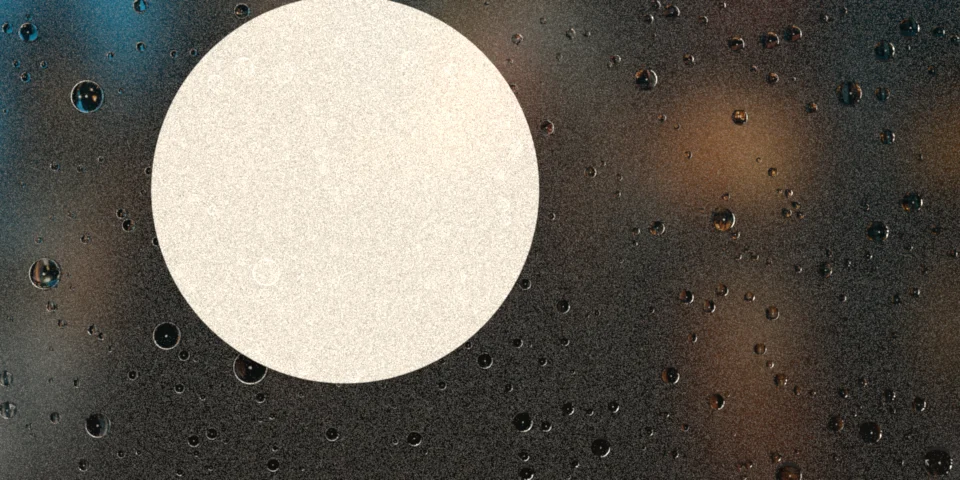
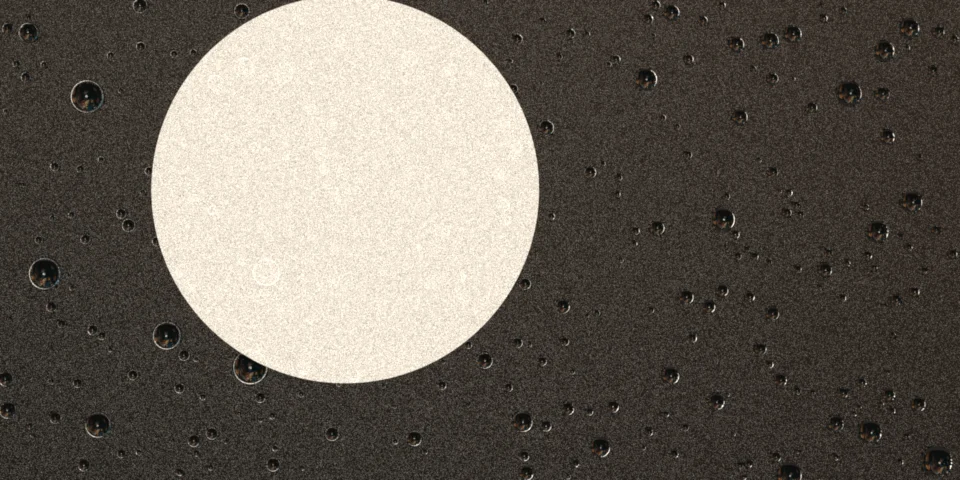 The light engine↗
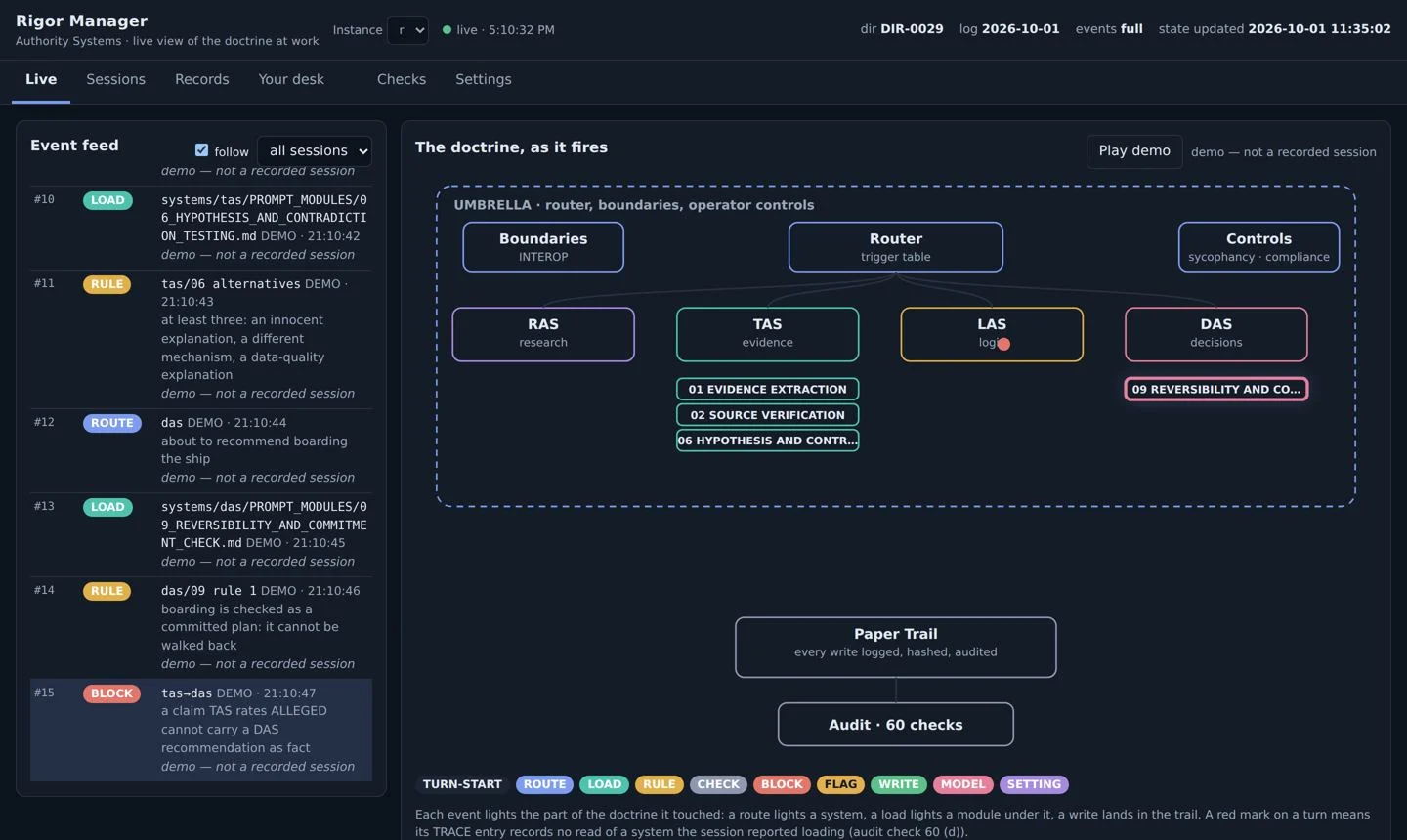 Authority System Suite↗
 Journalism Workbench↗
 Opallite↗
Get in touch.
I'm open to creative technical project management, founding teams, and agentic AI engineering and research. I read everything that comes in, and I answer.
onysnowstudios@gmail.comLinkedIn →
