A movie poster is made for one release. It is designed, printed, shipped and hung, and when the film changes, so does the wall. While writing the plan for Opallite I kept returning to that cycle, because it is art that is paid for over and over.
What the plan counts
Chapter 7.3 is about cost savings for content providers. For movie theaters it estimates:
- 8 to 12 million posters printed in the US each year
- $15-30 to produce each one, plus $5-12 to distribute it
- about 5,800 US theaters
- $120-180 million a year in total
These are the plan's estimates. I found no source for them. My own arithmetic also pokes at them: the same section puts 15-25 posters in each theater, and 5,800 theaters at that rate hold roughly 87,000 to 145,000 posters at a time. Printing 8-12 million a year would mean swapping every one of them every few days. So the figure probably counts more than lobby posters, or it is wrong. Finding out which is the first job.
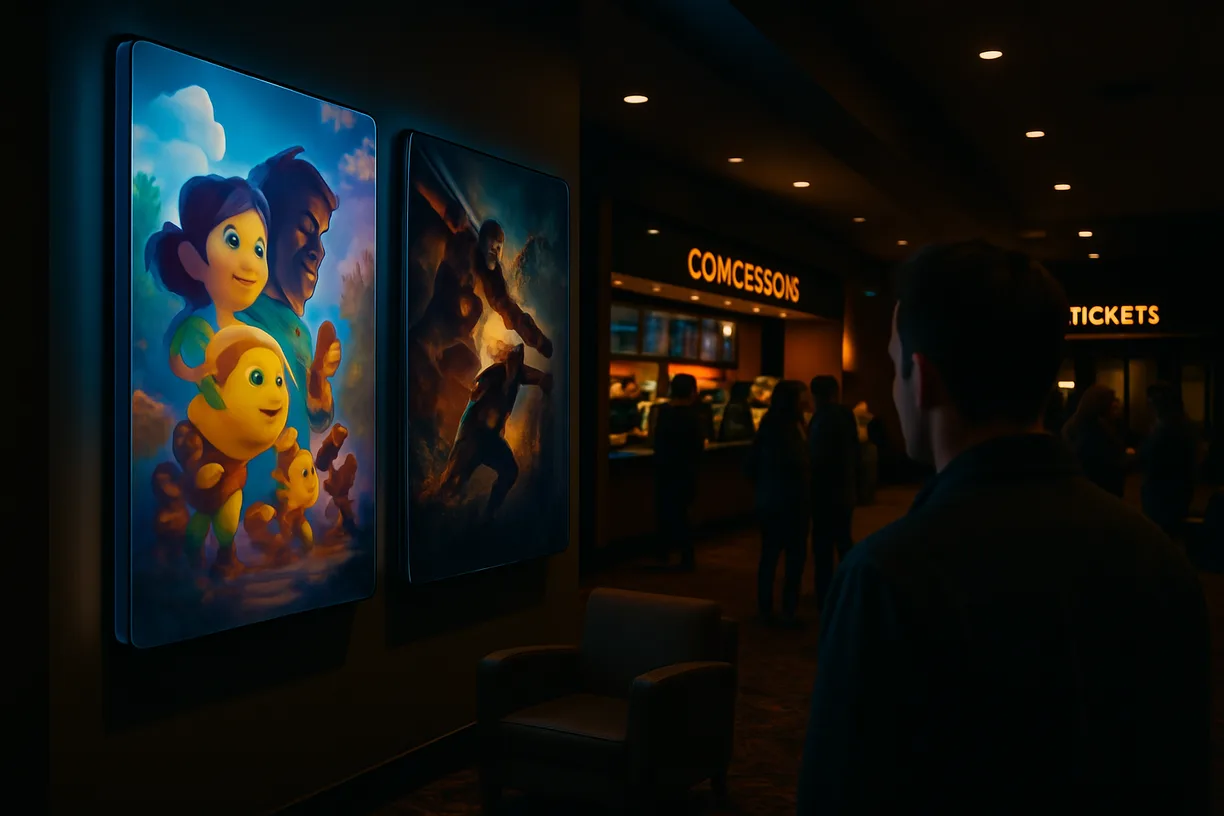
The idea underneath survives the arithmetic. A printed poster has one life. A digital one can change on release day, swap for the next film, or stay available to a fan afterwards. My spec for the theater-lobby concept render uses a 27 by 40 inch canvas, the size of a standard one-sheet.
Art that already exists
Chapter 9, "Repurposing Existing Content", pushes the thought further. Studios, game developers and labels already hold concept art, stills and marketing art they have paid for, and most of it is, in the chapter's words about concept art, "rarely seen by audiences beyond brief glimpses in 'art of' books or special features." The chapter argues it could be sold as collectible digital art on a canvas with no new production cost:
"generate substantial new revenue from assets you've already created"
That is a claim, not a result. The chapter names big studios as examples of the kind of archive it means, and puts revenue guesses next to them. I am leaving those out. They are unsourced, and my files show no agreement with, or conversation with, any of those studios.
From wall to retail kiosk
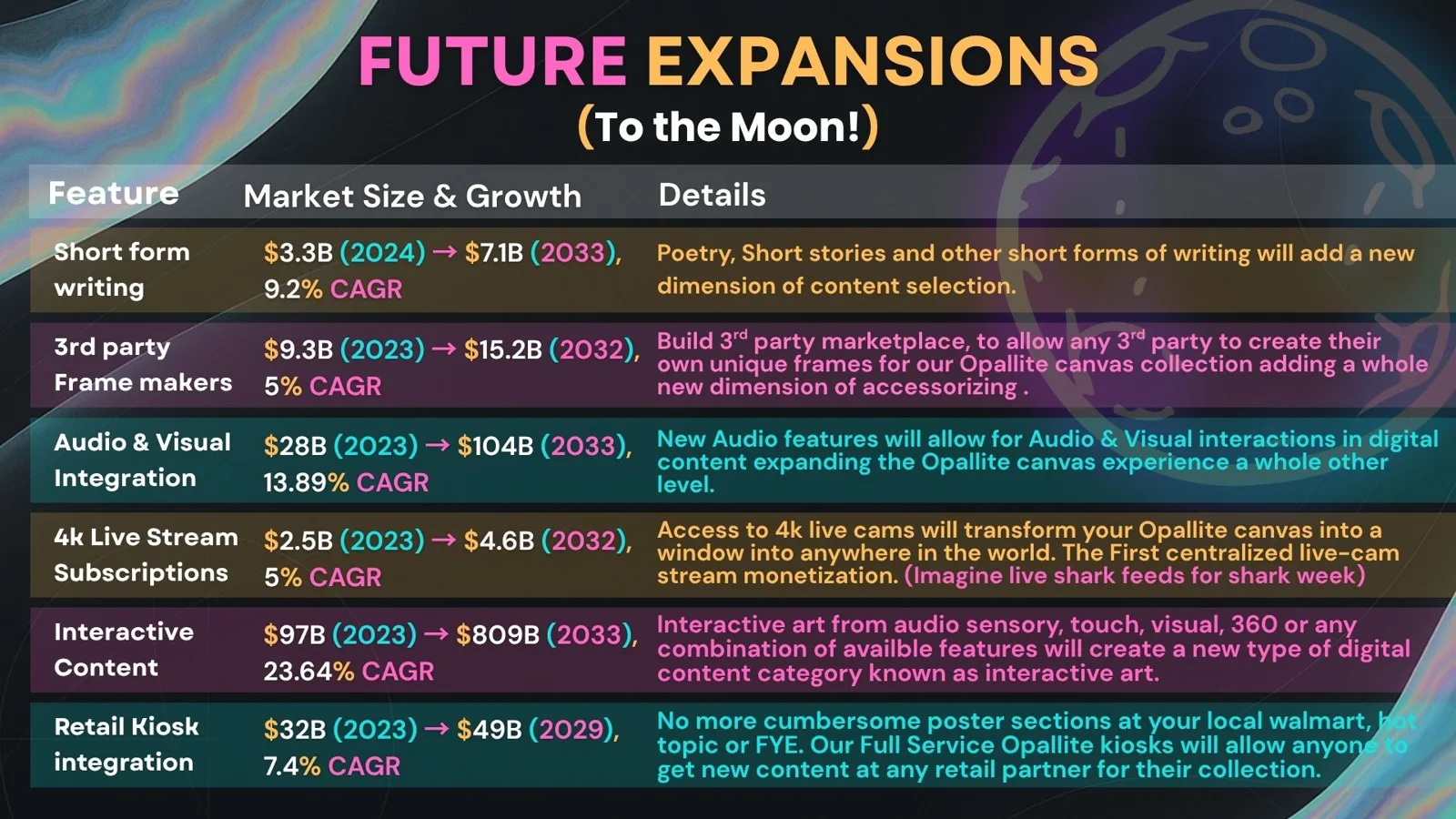
The idea reaches the deck on slide 12, Future Expansions, under "Retail Kiosk integration":
"No more cumbersome poster sections at your local walmart, hot topic or FYE. Our Full Service Opallite kiosks will allow anyone to get new content at any retail partner for their collection."
Those stores are examples, not partners. The slide gives the kiosk market as $32B in 2023 growing to $49B by 2029, at 7.4% a year. That is a deck estimate I have not sourced. The kiosk shares the slide with short-form writing, third-party frame makers, audio and visual integration, 4K live-stream subscriptions and interactive content. The slide is titled "To the Moon!" and it is a direction, not a commitment.
Chapter 12 goes further: a metal coin with a chip, acting as a physical key to a piece of digital art, sold at a kiosk that replaces the poster rack. The coin has its own post.
The honest chain
Opallite is at concept stage, Technology Readiness Level 1-3 in the deck. There is no kiosk, no coin, no signed retailer and no studio deal. What exists is a chain of reasoning:
- Physical art for media is printed in volume and replaced often.
- Fans and collectors have no good way to keep or collect the art they liked.
- A canvas, a platform and a kiosk could connect those two facts.
Each link needs testing. The volume and cost figures need a real source. And the plan never answers who owns and approves studio artwork, which matters more than anything else on this page. I would have to ask rights holders before building on their archives.
Why I keep it
I like the idea because you can picture it: the empty spot where a poster rack used to be, and a screen in its place showing this week's art. Whether anyone builds that depends on the first canvas existing, and that comes first.
