Most art on a wall is silent. You look, maybe read a label, and that is the end of it. In the Opallite plan the canvas can answer: a viewer sends a message from the wall, and the artist replies on that same wall.
Message in, reply out
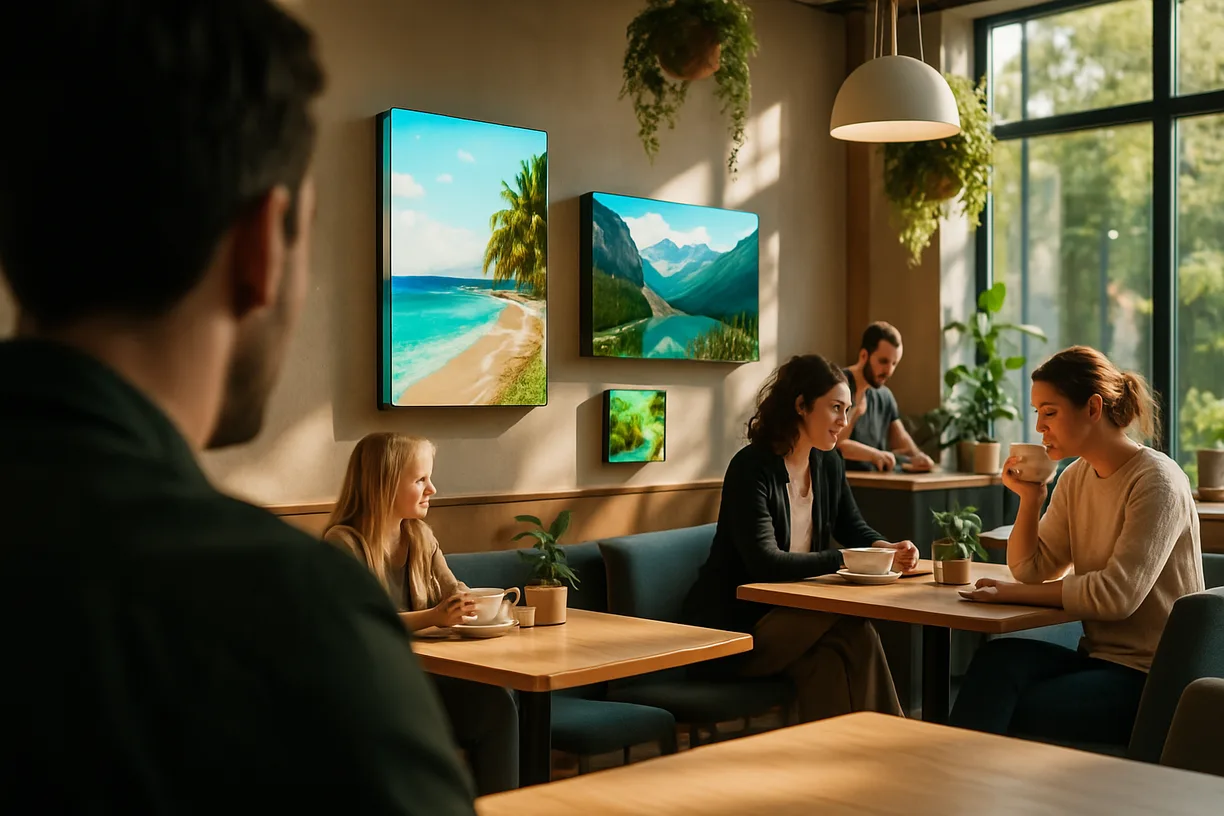
The plan calls it Canvas-to-Artist Messaging. Anyone viewing artwork on a canvas can send the artist a direct message "with a simple interaction." The message arrives with context: which artwork prompted it and where the canvas is. The viewer can add a photo, audio or a short video, and automatic translation lets a note from one country reach an artist in another.
The artist's half is the part I like best. Direct Canvas Reply lets the artist respond "directly to the specific Canvas where the message originated." The plan describes the moment this creates: "a viewer sends a message and receives a personal reply directly on the Canvas they're viewing." Replies can be scheduled, so one can land at a good time for the person who sent the note.
Two inboxes, on purpose
An artist who gets all of that in one pile would drown, so the plan splits it.
The Fan Inbox is for appreciation. It has conversation archives the artist can choose to share, scheduled public Q&A sessions across many canvases at once, templates for common questions, priority filtering for volume, and "Geographic Targeting" to message canvases in particular places.
The Business Inbox is for work. Incoming messages sort into collaboration requests, commission inquiries, curatorial interest and contract work. It has verification badges for legitimate contacts, portfolio sharing, a rate card, contract templates, a negotiation workspace, payment processing and project tracking.
The plan's reason: the split lets artists "maintain appropriate boundaries between personal fan engagement and professional opportunities." A fan note and a commission offer need different answers, and nobody should sort them by hand.
Where is my work right now?
The other half of the dashboard answers a question most artists never get to ask. The Global Display Map is "an interactive world map showing the precise locations where an artist's work is currently being displayed on Digital Canvases." Around it sit density heatmaps of where the work is popular, time-based views by hour, day and season, and "collection context": whose work hangs beside yours.
Chapter 4 sets the tone for all of it. Technology should become invisible so that "art takes center stage."
Making copies scarce
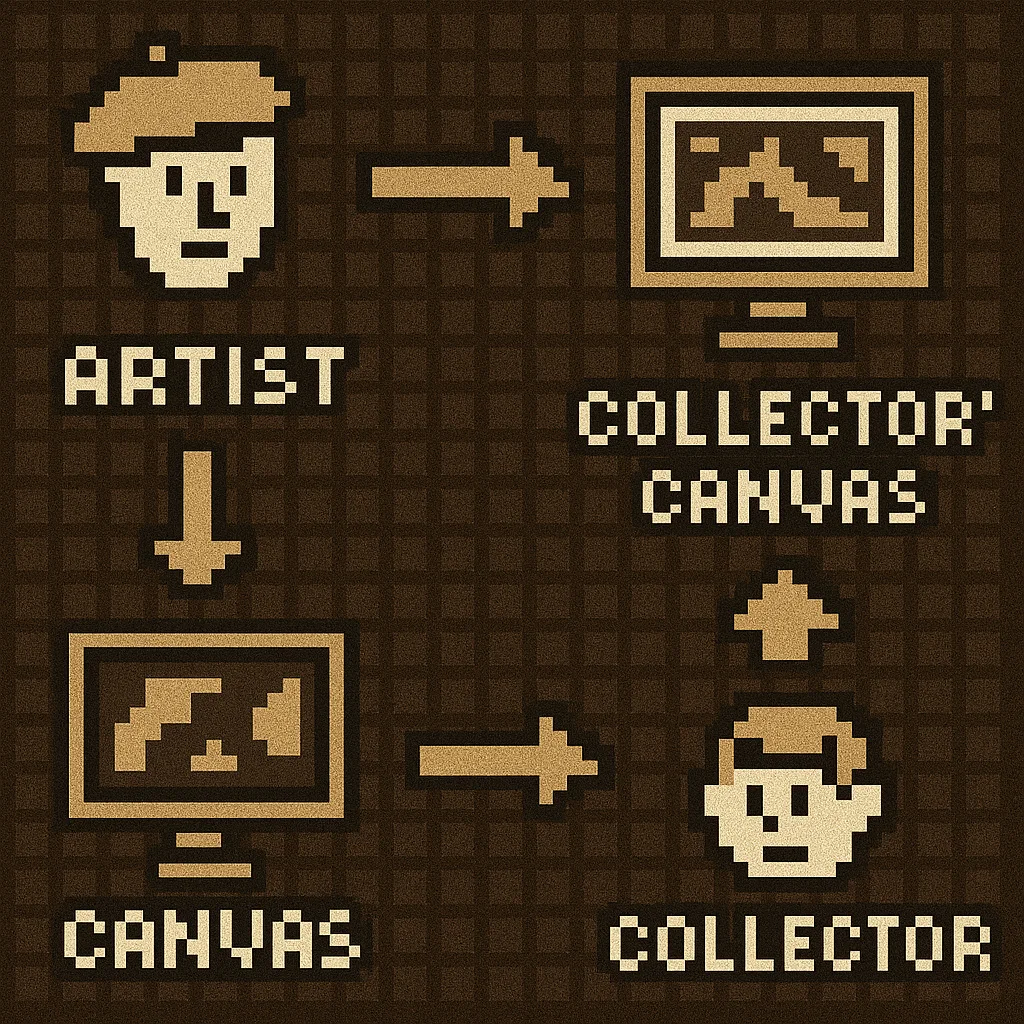
Digital art copies for free, which is its great weakness as a collectable. The plan's answer is editions, "transforming the traditional weakness of infinite reproducibility into a strength."
- Circulation controls: the artist sets the exact number of copies that can exist.
- Edition tiers: first editions, second editions and beyond, each marked and tracked.
- Collector verification: a collector can confirm which edition number they own, out of how many.
- Waiting lists for sold-out editions, and announcements that build anticipation.
Editions start optional and move toward mandatory limits as the ecosystem matures. The plan also describes a royalty to the artist on resales, "typically 10-15% of sale price." I have no source for that range, so read it as a design parameter.
One idea, three mechanisms
Messaging, the map and editions push the same way: an artist should be able to see, reach and be paid by the people who live with their work. The reply is the part a person can feel.
None of this exists yet. It is concept-stage design, and the plan records no testing with artists or viewers. What the design is trying to fix is plain enough: the artist usually cannot see where their work hangs, and the person looking at it usually cannot reach the artist.
